


Best Digital Marketing Tools for Small Businesses in 2026 for Your Digital Marketing Needs
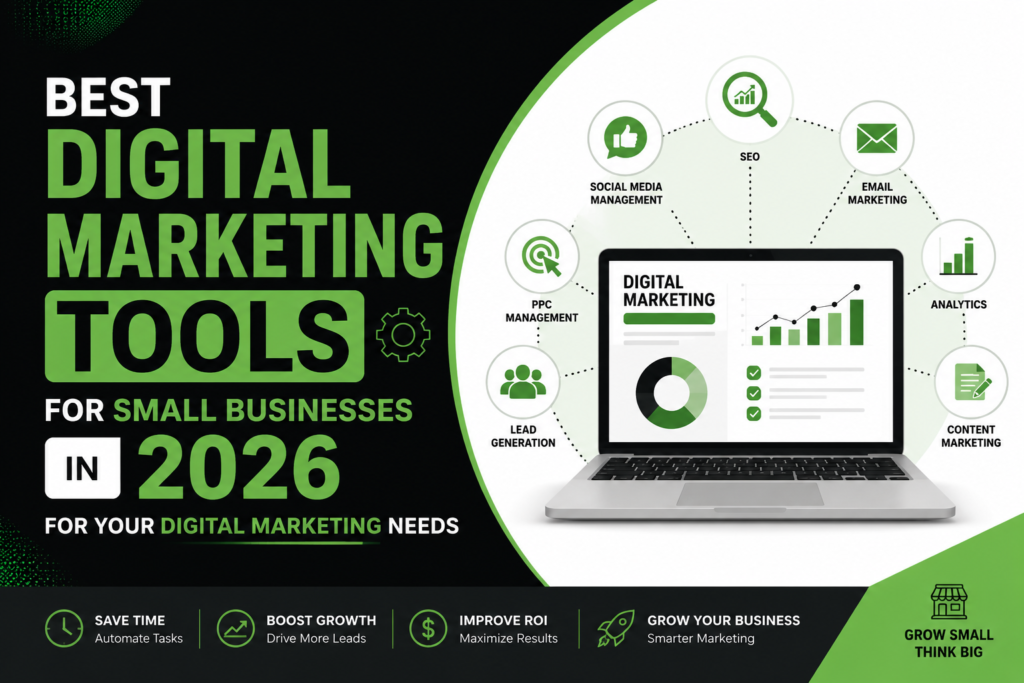
Over the years, consumer behavior has undergone a drastic change, and small local enterprises are facing tough competition, even globally. Consequently, businesses can no longer depend on traditional marketing strategies to attract customers. Hence, the digital marketing and advertising company has introduced a set of digital marketing tools 2026, which are state-of-the-art and affordable. Online purchasing has left businesses with large amounts of data to interpret and act upon. Above all, keeping up with the competition and the workload, manually handling everything becomes hectic. As a result, all affordable digital marketing tools for startups have been made more accessible. Additionally, many platforms have integrated automation, artificial intelligence, SEO, customer relationship management systems, and much more. Such efforts push businesses to choose the right tools, improve efficiency, visibility, and profits. This guide is a brief glimpse of what marketing tools for small business growth have in store. How to Describe Digital Marketing and Digital Marketing Tools 2026? Digital marketing refers to the act of promoting products, services, or brands on online platforms. Generally, the advertisement is conducted through digital channels, including search engines, websites, social media, email, and online ads. As people use the internet daily, digital marketing is an efficient way for businesses to reach and engage potential consumers. Moreover, the software applications, platforms, or technologies that help businesses plan, execute, monitor, and improve online promotional campaigns are the digital marketing tools 2026. With this, the purpose of the digital marketing and advertising company is to provide an organized system with automated features that will make the entire process faster and more effective. Before the introduction of these tools, businesses had teams designated for every job, and each task was completed manually. This method used to take up a lot of time and effort. Small businesses, in particular, faced significant difficulties in this respect, as they have limited resources and personnel. Thus, SMEs also have a fair ground to compete with affordable digital marketing tools for startups. What Makes Affordable Digital Marketing Tools for Startups Attractive? Automation Saves Time Decisions are Based on Data Businesses receive valuable data from every click, search, purchase, and interaction. Such information tells a lot about customer behavior. However, raw data needs to be analyzed to bring out a positive influence. Once proper analysis is conducted, the insights are used to predict future trends and improve marketing strategies. Above all, many platforms rely on artificial intelligence to measure returns on investment, allowing businesses to determine which strategies are generating commendable profits and which are underperforming. Personalized Customer Experiences Nowadays, customers rarely react to generalized advertisements. They are more likely to visit a campaign that interests them. Hence, marketing tools for small business growth and AI work together to analyze their interests, past purchases, and browsing patterns, and create campaigns considered as clickbait. Social Media Management Made Easy What are the Best Digital Marketing Tools 2026? The following are just a few of the best online marketing software for small businesses: HubSpot HubSpot is considered the most powerful tool among all-in-one digital marketing platforms. Typically, it combines everything, whether it be emails, landing pages, social media buttons, or AI-powered content into a single segment. This tool is highly recommended for businesses that seek a centralized marketing, customer service, and sales ecosystem. Semrush Semrush is a critical marketing tool for small business growth as it drives a high Return on Investment (ROI). Basically, ROI is the effectiveness of promotional campaigns in attracting customers and generating a profitable response. Furthermore, ROI directly influences search traffic. Hence, businesses have a relatively greater chance of being visible in people’s feeds with a favorable ROI. Buffer Buffer is an affordable tool that allows businesses to manage multiple social media accounts. Canva Canva is a graphic design tool that allows SMEs to create templates, generate AI images, and edit images or videos all under one roof. Other Digital Marketing Tools 2026 A Versatile Digital Marketing and Advertising Company If you are looking for a digital marketing and advertising company that can handle a wide range of expertise, look no further 14K Business Solutions LLC has got your back. You can pick and choose from social media marketing, SEO, consultancy, or app and web development. Nonetheless, if you wish to know more about us, simply visit https://14kbsol.com/. Frequently Asked Questions What are the best digital marketing tools for small businesses in 2026? HubSpot, ChatGPT, Canva, and Semrush are a few options for digital marketing tools 2026. Which digital marketing tools give the best ROI for small businesses? We cannot pick one tool. For each task, a different tool results in a high ROI.
10 Proven Tactics to Enhance Your Website’s User Experience
People click away from slow or messy websites faster than you think. Does a good digital marketing and advertising company help? Yes! Let me explain. You spend good money creating solid content and running ads, but if the site feels clunky, most visitors bounce before they see what you offer. Good user experience changes that. It keeps people around, helps them find what they need, and turns casual browsers into actual customers. In the world of digital marketing and advertising company, we see this play out every single day. A website that loads quickly and feels easy to use simply performs better. Here are 10 tactics that actually work (take it a secret from best marketing agencies). I’ve seen them lift engagement and conversions for plenty of businesses. Make Your Pages Load Lightning Fast Speed matters more than most people admit. If your page takes more than three seconds to load, over half of mobile visitors will leave without even looking around. A one-second delay can cut conversions by about 7%. For a site making $100,000 a day, that adds up to serious lost revenue, millions over a year. Most marketing agencies opt to start simple. Compress your images and switch to WebP format. Minify your CSS and JavaScript files. Turn on browser caching. Throw in a good CDN so files travel shorter distances to your visitors. Test everything with Google PageSpeed Insights regularly. Aim for under two seconds. When you hit that mark, people stick around longer, view more pages, and feel better about your brand right from the first click. This one fix often gives the quickest boost in results. Build with Mobile Users in Mind First More than 60% of web traffic now comes from phones. Yet plenty of sites still feel awkward on small screens. Mobile bounce rates often sit around 55-60%, higher than desktop. That gap tells a clear story; people expect smooth experiences no matter the device. When you get mobile right, you automatically improve user experience for most of your audience. Google likes it too, since mobile-first indexing is the standard now. One bonus: well-optimized mobile sites can see noticeably higher conversion rates. All the best marketing agencies lay heavy focus on the mobile first design for websites. Keep Navigation Dead Simple Complicated menus frustrate people fast. They want to find things without guessing. Stick to clear labels and limit your main menu to five or seven items max. Add a search bar if your site has more than a few dozen pages. Use breadcrumbs on deeper content so users always know where they are. Think about how you shop online yourself. You want to move around without confusion. Clean navigation does exactly that. It builds confidence and encourages visitors to explore instead of hitting the back button. Guide Eyes with Strong Visual Hierarchy Most visitors scan pages rather than read word for word. Help them by making the important stuff stand out. It is recommended to use bigger, bolder headings, and put key calls-to-action in bright, contrasting colors. Equally important, add plenty of white space so the page doesn’t feel crammed. Ideally, break text into short paragraphs and use bullet points where they make sense. Consistent alignment across the design helps too. When everything has a clear order, users understand your message more quickly. They decide faster and take action with less effort. This approach alone can lift time on page and reduce frustration. Most digital marketing and advertising company pay more than usual time on this aspect. Streamline Your Forms Long forms kill momentum. Every extra field increases the chance someone will abandon the process. Ask only for what you truly need. Show validation messages right away as people type. In case of multi-step forms, add a progress bar so users see how close they are to finishing. Offer a guest option, when possible, instead of forcing account creation. Small changes here make a big difference. Cleaner forms feel less like work, so more people actually complete them. Test a few versions and watch your completion rates climb. Make Your Site Accessible to All A good comprehensive design hurts no one. As an SEO expert would say, always use alt text for images. Ensure text has enough contrast against backgrounds. Do you know, these small steps help users with disabilities, but they also improve the experience for everyone else. Clearer layouts and better readability benefit all visitors. Deliver Content That Actually Helps A beautifully designed website doesn’t hold its own without good content. If you want to create great content here are some pointers: When content feels relevant and easy to digest, trust builds naturally. People stay longer and come back more often. Place Clear Calls-to-Action Calls to actions aren’t just visuals, they do push the visitors into conversions. If you were to place a call to actions on your website, use words like Get Your Free Quotes or Shop Now! Also, take your time to place them on the website where they shone the best. Test different colors and positions, but keep the overall design clean. Strong CTAs gently guide users toward the actions you want without feeling pushy. Watch Real User Behavior with Data In the real world, guessing and fixing rarely works. But if you can benefit from tools such as heatmaps, to see where people click, scroll, or get stuck. Do you know the secret lies in bounce rates, time on page, and which pages cause exits. There are tools like Core Web Vitals, Google’s measures for loading speed, interactivity, and visual stability, that give you clear targets to hit. When you spot problems, fix them based on actual behavior. Data turns opinions into concrete improvements and keeps your site evolving in the right direction. Test Changes and Keep Improving Launch a tweak, then measure what happens. Run simple A/B tests on headlines, layouts, or button styles. Talk to a few real users when you can; they often point out issues you missed. Treat your website