


Design System

video seo company

Our Blog

inspiring, insightful & accurate

Lorem ipsum dolor sit amet, consectetur adipiscing elit. Ut elit tellus, luctus nec ullamcorper mattis, pulvinar dapibus leo.

How to get ChatGPT to recommend your business using SEO, helpful content, online visibility, trust, and clear business information.

How Do I Get ChatGPT To Recommend My Business

Your next customer might not type anything into Google. Instead, they might open ChatGPT and ask who to call for your exact service in your exact city. An AI will answer that question. It will name someone. So, the real question is simple. Will that someone be you? This guide breaks down how ChatGPT SEO actually works. You will learn what how to appear in ChatGPT search really means, and how to build the authority that gets your business named. Why ChatGPT Recommends Some Businesses And Not Others First, understand how ChatGPT thinks. It does not rank pages the way Google does. Instead, it builds recommendations from patterns across your website, your reviews, and your presence on other trusted platforms. Because of this, AI search optimization works differently than traditional SEO. Google ranking measures how well one page answers one search. ChatGPT recommendations measure something broader. They measure how strongly your brand name connects to a category or a city. This connection lives inside the AI’s data and its live web results. So, you can rank first on Google and still get skipped by ChatGPT. You can also get mentioned by ChatGPT without ranking in the Google top ten. This is exactly why generative engine optimization, often shortened to GEO SEO, has become its own distinct skill. For clarity, AI systems need to understand five things about your business: Repeat your business type consistently everywhere, for example, local HVAC repair companies or B2B SaaS providers. This consistency builds real AI search visibility over time. What Actually Drives AI Search Engine Optimization Reviews carry enormous weight in this system. Studies show ChatGPT’s picks average around 4.3 stars, and businesses under roughly 150 reviews rarely get named at all. So, a steady flow of fresh reviews matters more than chasing a flawless five-star rating. Respond to every review too, since your replies become readable content that describes your services in plain language. Meanwhile, structured data plays a major role in LLM SEO. Schema markup helps AI models understand your business clearly, almost like handing them a map instead of raw text. Google’s AI Mode alone pulls most of its citations from pages ranking in the top twenty organic results. So traditional SEO still matters here too. Additionally, third-party mentions boost your AI brand visibility significantly. News articles, industry publications, and high authority directories all signal trust to AI systems. Being mentioned by an outside, credible source carries more weight than anything you say about yourself. Curious where your business currently stands? Ask ChatGPT directly who it recommends for your service in your city. That answer gives you a clear baseline to work from. Building Real Answer Engine Optimization Into Your Content Content style matters more than people expect. ChatGPT prefers clear, quotable sentences over vague marketing language. Write content that answers real buyer questions directly, the same way you would explain something to a friend. This approach sits at the heart of answer engine optimization. AI systems extract and cite short, confident statements far more often than long-winded paragraphs. Your Google Business Profile deserves special attention here too, since AI Mode pulls heavily from that data for local recommendations. Keep your hours, address, and services updated constantly. You may not think twice, but small inconsistencies across platforms send signals of untrustworthiness to AI systems. If how to get cited by ChatGPT is your specific goal, focus on becoming genuinely quotable and accurate. Also, structure your content with clear headings, direct answers, and links to related pages on your site. The approach helps both human readers and AI systems understand exactly what you have to offer. How Local SEO And Video Content Support AI Visibility Notably, strong local SEO feeds directly into AI recommendations. Work on location and service area clarity to get recommended for the service in your area. Consistent business information across Google, Bing Places, and major directories builds the foundation AI models rely on. Without this foundation, even great content struggles to get noticed. Video content is also gaining ground fast in this space. Working with a video seo company helps your business show up across another discovery channel entirely. AI systems increasingly reference video transcripts and descriptions alongside written content. Video SEO services that optimize titles, descriptions, and captions give your brand another strong path toward visibility. This applies both in Google AI Overviews and inside ChatGPT itself. Frequently Asked Questions What is ChatGPT SEO? ChatGPT SEO means building your online presence so ChatGPT confidently recommends your business. It relies on reviews, structured data, third party mentions, and consistent information across your website and directories. How can I get my business to appear in ChatGPT search? Focus on strong, recent reviews and a complete Google Business Profile. Write content in clear, quotable sentences. Consistency across every platform makes it far easier for ChatGPT to trust and recommend you. Does Google SEO help my business appear in ChatGPT? Yes, strong Google SEO helps. AI Mode pulls a large share of its citations from top-ranking organic results. However, ChatGPT also weighs reviews and third party mentions heavily, so Google rankings alone are not enough. How do I rank my business in ChatGPT? There is no paid placement option. Genuine authority signals are the only lever available. Build reviews, earn media mentions, keep your business information consistent, and publish content that answers real customer questions clearly. Getting Found Where Your Customers Are Actually Searching AI search is no longer optional. It is becoming foundational to how people discover businesses every day. Building real AI search visibility takes reviews, structured data, consistent information, and content written to be quoted, not just read. 14K Business Solutions helps businesses build exactly this kind of presence. This covers local SEO, Google Business Profile management, video seo services, and full generative engine strategy. If your business has not been optimized for how people search today, reach out. Let us help you get recommended, not skipped.
Read More »
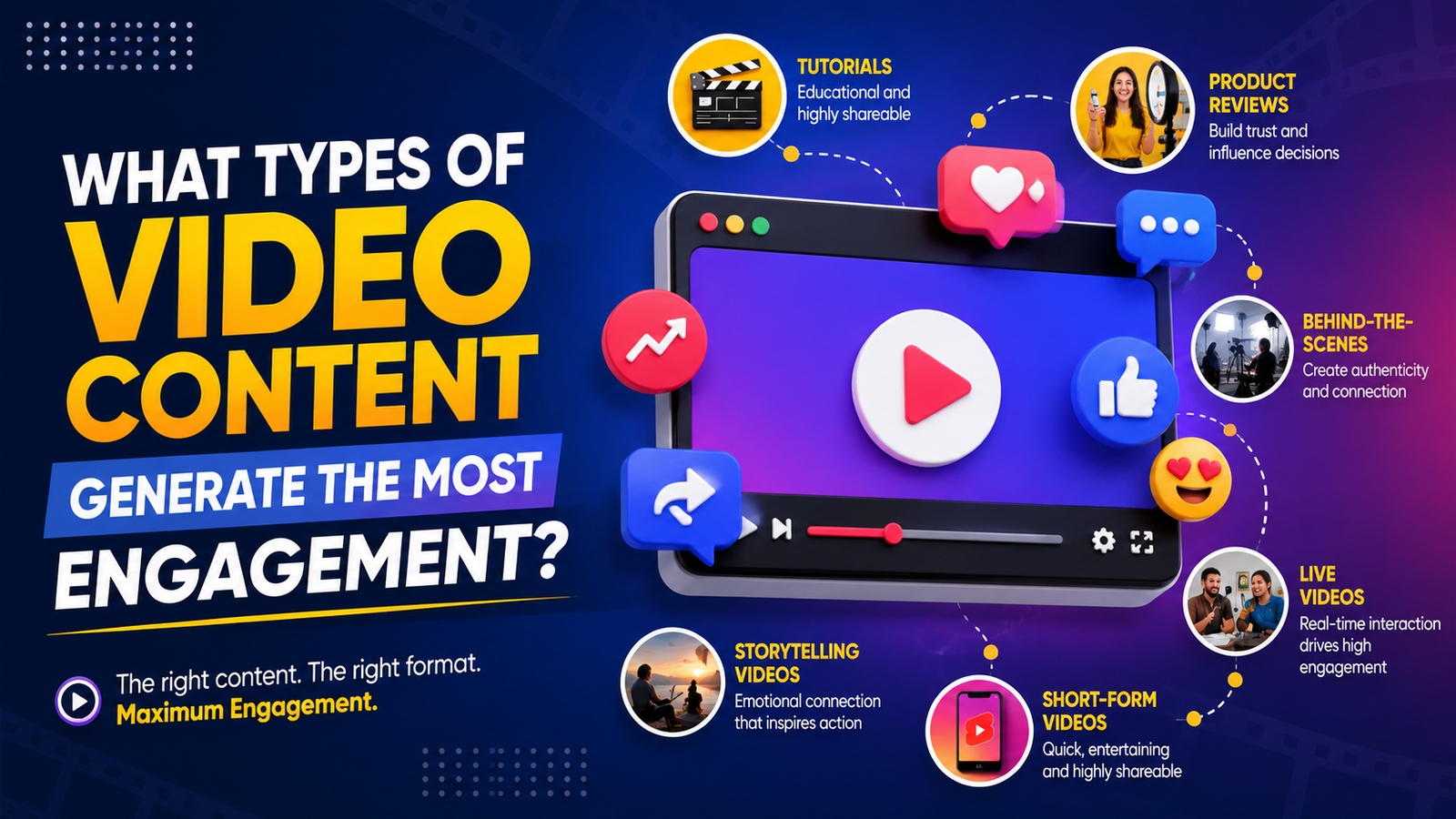
Think about the last video that made you stop scrolling. It probably did not need a long introduction or expensive production. It simply gave you a reason to pay attention right away. People stop for videos because they're quick and easy to watch. But grabbing someone's attention is only the first step. If the video doesn't give them a reason to stay, they'll simply keep scrolling.  A strong video content marketing strategy starts with understanding what your audience actually wants to see. Some people respond to quick tips. Others prefer customer stories, product demonstrations, or a look behind the scenes. Here are some of the video formats that continue to generate strong engagement across social platforms. Short-Form Videos Short-form content works because it gets to the point quickly. Platforms such as Instagram Reels, TikTok, Facebook Reels, and YouTube Shorts are built around fast, mobile-first viewing. The first few seconds matter most. If viewers do not understand what the video is about almost immediately, they will probably move on. Popular video content examples include: Quick “Did You Know?” facts Before-and-after transformations Product teasers Short behind-the-scenes clips Trending audio with a brand-related idea One-question, one-answer videos Short-form content is also easier to test. You can try different hooks, topics, captions, and filming styles without putting weeks into a single post. Over time, those small experiments show you what your audience responds to most. Educational and How-To Videos  Helpful videos almost always perform well. If you can answer a common question, explain something clearly, or show people how to do something, there's a good chance they'll keep watching.  At the same time, people begin to see your business as a helpful resource rather than a company that is only trying to sell to them. Some video ideas you could try include: Product demonstrations: Let people see the product in use instead of simply listing its features. Quick tips: Share one helpful idea they can put into practice right away. Myth-busting videos: Address a common misconception people have about your industry. Step-by-step tutorials: Show viewers how to complete a task without overcomplicating it. Frequently asked questions: Choose one question customers ask often and answer it in a clear, simple way. You probably already have plenty of ideas for this type of content. Check your inbox, comments, and sales conversations. If the same question keeps coming up, it is a good sign that people would watch a video about it. Educational videos can also stay useful for much longer than trend-based content. A helpful tutorial may continue bringing in views months later because people are still searching for the answer. Behind-the-Scenes Content Not every video has to look like a professionally made advertisement. Many people are just as interested in the people behind the business as they are in the product or service itself. Showing what happens behind the scenes gives your audience a better idea of who you are and what your day-to-day work actually looks like. Some simple behind-the-scenes video ideas include: Employee introductions A typical day at work Packing customer orders Preparing for an event Office celebrations Work in progress How a service is delivered These videos don't have to be perfect. In fact, the moments that feel the most natural are often the ones people connect with the most. A quick look at your team, your workspace, or the process behind your work can make your business feel more approachable and relatable. Customer Testimonials and Case Studies Before choosing a business, most people want to know what the experience is actually like. Hearing from someone who has already been through the process can answer questions that a sales page never could. The best testimonial videos don't sound rehearsed. Instead of handing customers a script, let them tell their story in their own words. Ask what challenge they were trying to solve, why they chose your business, what stood out about the experience, and whether they would recommend you to someone else. Customer stories give potential buyers a chance to hear directly from people who were once in the same position. That kind of honest feedback can help someone feel more confident about taking the next step. Written reviews are still valuable, but seeing and hearing a real customer talk about their experience often feels more genuine and memorable.. Videos That Invite Participation The best videos do not always speak at the audience. Sometimes, they start a conversation. Interactive content encourages viewers to comment, vote, answer, guess, or share an opinion. That participation can increase watch time and help the post reach more people. Interactive video content examples include: Polls Quizzes “Choose one” questions Challenges Q&A videos This-or-that comparisons Guess-the-answer clips Comment-based follow-ups The interaction does not need to be complicated. Even a simple question at the end of a video can encourage more comments. For example, instead of ending a product video with “Shop now,” you could ask, “Which option would you choose?” That small change gives viewers a reason to respond. Why You Should Mix Different Video Styles Posting the same type of video all the time can start to feel repetitive. You might share a quick tip one week, then switch to a customer story, product demo, team introduction, or behind-the-scenes clip the next. The right format depends on what you want the video to do. Some videos help you reach new people. Others answer questions, build trust, or simply give viewers a better feel for your business. Using a mix keeps your content fresh and helps you avoid falling into the same pattern. It also shows you what your audience actually enjoys. You may find that tutorials get more saves, while casual team videos bring in more comments. The only way to know is to try a few different approaches and pay attention to the response. Common Video Marketing Mistakes A video can look polished and still fall flat. Most of the time, the problem is not the camera or the editing. It is that the video takes too long to get anywhere or never gives people a reason to keep watching. Some brands spend the first few seconds introducing themselves when viewers are still deciding whether to stay. Others pack too much into one video, forget that many people watch without sound, or copy the same format across every platform. Even a good video can lose momentum if it feels too promotional or ends without telling the viewer what to do next. Before filming, be clear about the one thing you want people to take away. When the message is focused, the video feels easier to follow and far more natural. A Quick Check Before You Publish Before posting your next video, ask yourself a few simple questions: Does the opening give people a reason to stop? Is the main point clear within the first few seconds? Does the video teach, entertain, explain, or solve something? Is the message easy to follow? Does the viewer know what to do next? Would someone find it useful enough to save or share? You do not need a “yes” to every question, but the video should give viewers something worthwhile. Frequently Asked Questions What are the four main types of content? Most content falls into four broad categories: educational, inspirational, entertaining, and promotional. Using a mix of all four keeps your content interesting while supporting different business goals. What are some good topics for videos? Good topics often come from real customer questions and everyday business activity. You could create videos about product features, common mistakes, industry myths, customer success stories, team members, new services, or behind-the-scenes processes. The most useful video content ideas usually focus on something the audience already wants to know. What is the best format for social media videos? Vertical video usually works best for Instagram Reels, TikTok, Facebook Reels, and YouTube Shorts because most people view these platforms on their phones. Keep the framing clear, include captions, and make the opening easy to understand. Studying successful video content examples can help, but your own performance data will tell you what works best for your audience. Turn Your Video Ideas Into a Clear Strategy There is no single video format that works for every business. Some audiences respond to quick tips. Others prefer customer stories, tutorials, or informal behind-the-scenes content. The best approach is to try different formats, pay attention to how viewers respond, and create more of what holds their attention. At 14 K Business Solutions, we help businesses plan, create, and improve video content for social media. From developing video content ideas to building a complete video content marketing strategy, our team focuses on content that feels relevant to the audience and supports real business goals.

What Types of Video Content Generate the Most Engagement?

Think about the last video that made you stop scrolling. It probably did not need a long introduction or expensive production. It simply gave you a reason to pay attention right away. People stop for videos because they’re quick and easy to watch. But grabbing someone’s attention is only the first step. If the video doesn’t give them a reason to stay, they’ll simply keep scrolling.  A strong video content marketing strategy starts with understanding what your audience actually wants to see. Some people respond to quick tips. Others prefer customer stories, product demonstrations, or a look behind the scenes. Here are some of the video formats that continue to generate strong engagement across social platforms. Short-Form Videos Short-form content works because it gets to the point quickly. Platforms such as Instagram Reels, TikTok, Facebook Reels, and YouTube Shorts are built around fast, mobile-first viewing. The first few seconds matter most. If viewers do not understand what the video is about almost immediately, they will probably move on. Popular video content examples include: Short-form content is also easier to test. You can try different hooks, topics, captions, and filming styles without putting weeks into a single post. Over time, those small experiments show you what your audience responds to most. Educational and How-To Videos  Helpful videos almost always perform well. If you can answer a common question, explain something clearly, or show people how to do something, there’s a good chance they’ll keep watching.  At the same time, people begin to see your business as a helpful resource rather than a company that is only trying to sell to them. Some video ideas you could try include: You probably already have plenty of ideas for this type of content. Check your inbox, comments, and sales conversations. If the same question keeps coming up, it is a good sign that people would watch a video about it. Educational videos can also stay useful for much longer than trend-based content. A helpful tutorial may continue bringing in views months later because people are still searching for the answer. Behind-the-Scenes Content Not every video has to look like a professionally made advertisement. Many people are just as interested in the people behind the business as they are in the product or service itself. Showing what happens behind the scenes gives your audience a better idea of who you are and what your day-to-day work actually looks like. Some simple behind-the-scenes video ideas include: These videos don’t have to be perfect. In fact, the moments that feel the most natural are often the ones people connect with the most. A quick look at your team, your workspace, or the process behind your work can make your business feel more approachable and relatable. Customer Testimonials and Case Studies Before choosing a business, most people want to know what the experience is actually like. Hearing from someone who has already been through the process can answer questions that a sales page never could. The best testimonial videos don’t sound rehearsed. Instead of handing customers a script, let them tell their story in their own words. Ask what challenge they were trying to solve, why they chose your business, what stood out about the experience, and whether they would recommend you to someone else. Customer stories give potential buyers a chance to hear directly from people who were once in the same position. That kind of honest feedback can help someone feel more confident about taking the next step. Written reviews are still valuable, but seeing and hearing a real customer talk about their experience often feels more genuine and memorable.. Videos That Invite Participation The best videos do not always speak at the audience. Sometimes, they start a conversation. Interactive content encourages viewers to comment, vote, answer, guess, or share an opinion. That participation can increase watch time and help the post reach more people. Interactive video content examples include: The interaction does not need to be complicated. Even a simple question at the end of a video can encourage more comments. For example, instead of ending a product video with “Shop now,” you could ask, “Which option would you choose?” That small change gives viewers a reason to respond. Why You Should Mix Different Video Styles Posting the same type of video all the time can start to feel repetitive. You might share a quick tip one week, then switch to a customer story, product demo, team introduction, or behind-the-scenes clip the next. The right format depends on what you want the video to do. Some videos help you reach new people. Others answer questions, build trust, or simply give viewers a better feel for your business. Using a mix keeps your content fresh and helps you avoid falling into the same pattern. It also shows you what your audience actually enjoys. You may find that tutorials get more saves, while casual team videos bring in more comments. The only way to know is to try a few different approaches and pay attention to the response. Common Video Marketing Mistakes A video can look polished and still fall flat. Most of the time, the problem is not the camera or the editing. It is that the video takes too long to get anywhere or never gives people a reason to keep watching. Some brands spend the first few seconds introducing themselves when viewers are still deciding whether to stay. Others pack too much into one video, forget that many people watch without sound, or copy the same format across every platform. Even a good video can lose momentum if it feels too promotional or ends without telling the viewer what to do next. Before filming, be clear about the one thing you want people to take away. When the message is focused, the video feels easier to follow and far more natural. A Quick Check Before You Publish Before posting your next video, ask yourself a few simple questions: You do not need a

Read More »