
Most businesses spend thousands on ads, but nothing on protecting the one thing that makes ads work in the first place.
That thing is their reputation. And right now, more businesses than you think are quietly losing customers because of what shows up when someone Googles their name.
They have no idea it is happening. They keep running ads, posting on social media, and wondering why growth has slowed down.
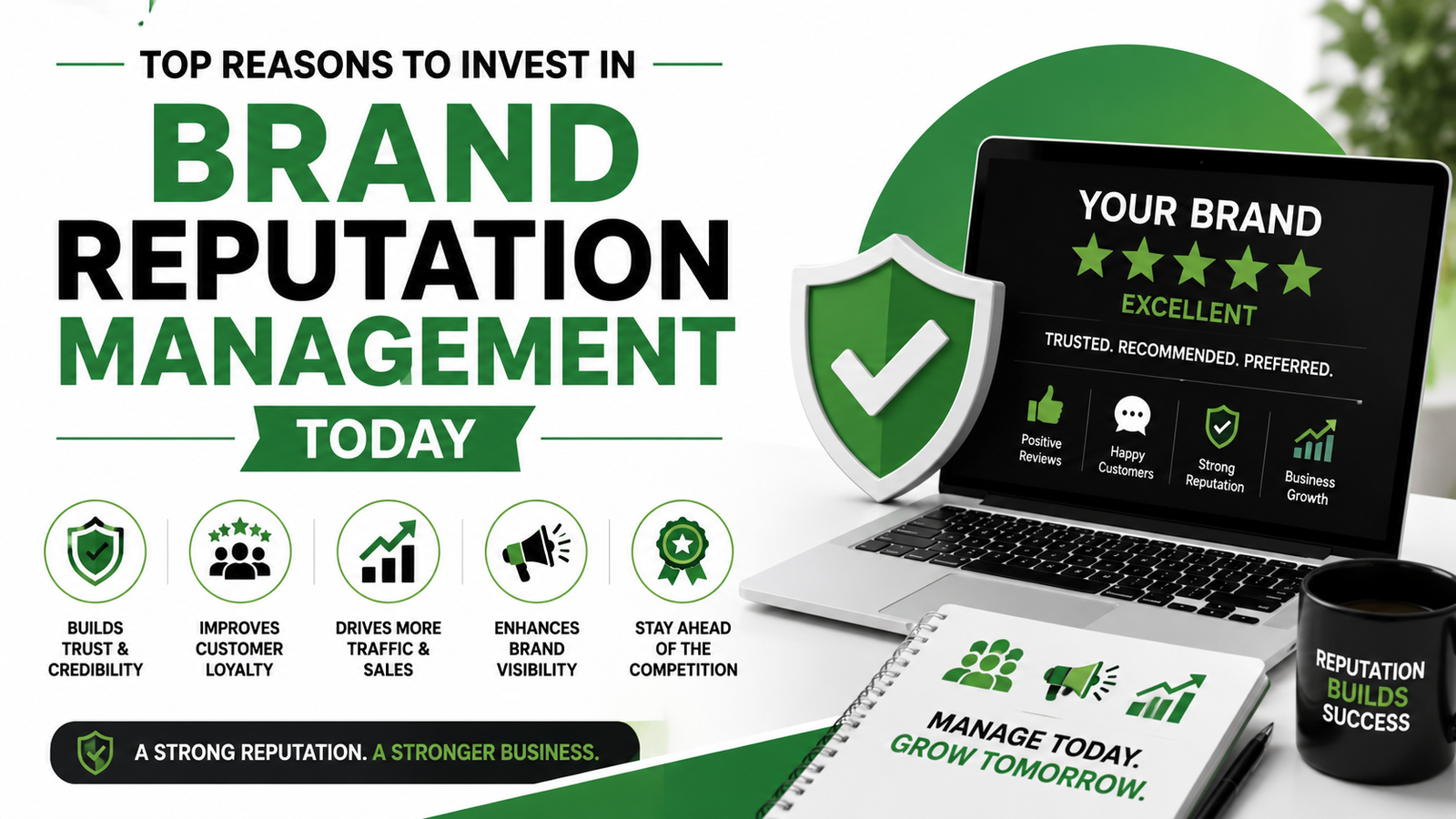
Brand reputation and online reputation management fix that problem at the root. Here is why investing in it today is one of the smartest business decisions you can make.
People Decide to Trust You Before They Ever Reach Out
Think about the last time you tried a new restaurant, hired a contractor, or bought something from a brand you had never heard of. Chances are, you looked them up first.
Everyone does this now. Consumers research the business online before they buy. Most consumers read reviews before they even visit.
So, by the time a potential customer reaches your website or picks up the phone, they have already formed an opinion about you.
If what they find looks good, they move forward. If it looks messy, outdated, or negative, most of them leave quietly and go to a competitor. You never hear from them. You never know you lost them.
This is why online reputation management is so important. You need to know what people see when they search your name. You need to catch problems early before they push customers away.
Weak Reputation Costs Real Money
Some business owners treat reputation as a soft, feel-good topic. The numbers say otherwise.
A company’s brand reputation makes up 63% of its total market value. That comes from Weber Shandwick research that has held up year after year.
On top of that, 86% of consumers say they are willing to pay more for a product or service from a brand they trust. So, your brand reputation does not just protect revenue. It actually lets you charge more and keep more loyal customers.
Now look at what happens when things go wrong. A single negative article ranking on page one of Google leads to a 22% loss in revenue on average.
A business sitting below a four-star rating loses the trust of around 52% of potential customers right away. And 66% of people say they flat-out avoid a business after reading negative reviews.
These are not edge cases. They happen to ordinary businesses every day. Small local shops, growing service companies, and online brands. All of them bleed customers silently because their reputation went unmanaged.
Businesses that claim their profiles on at least four review platforms generate 58% more revenue than those that do not. And those that respond to at least 25% of their reviews earn around 35% more on top of that. The return on attention here is very real.
Your Reputation and Your Google Rankings Are Connected
A lot of business owners think SEO is about keywords and backlinks. Those things matter. But Google also pays close attention to what customers say about you online.
After major algorithm updates in early 2024, Google leaned harder into what it calls E-E-A-T. That stands for Experience, Expertise, Authority, and Trust. Reviews feed directly into the trust part.
When real customers leave detailed reviews mentioning your services and location, Google uses that content to understand your business better. It helps match you with the right searches.
The top result on Google gets 27.6% of all clicks. Every spot you drop below that costs you visibility in a very measurable way.
Businesses with stronger reputations tend to earn better reviews consistently, which signals freshness and relevance to Google and pushes rankings higher over time.
One Bad Moment Online Can Spiral Fast
Nobody plans for a reputation crisis. But they happen more often than people expect, and they move fast.
A frustrated customer posts a complaint. Someone shares it. A local news story picks it up. Within 24 hours, your brand looks completely different to people who have never heard of you before.
In 2026, information travels so quickly that businesses have very little time to get ahead of bad news once it starts spreading.
Around 90% of executives in a Deloitte survey of over 300 companies ranked reputation as their biggest risk area. That was not marketing people or PR teams saying that. It was executives across industries who understood what keeps a business standing.
The FTC stepped in and banned fake and AI-generated reviews in August 2024. That came after a 758% increase in fake AI reviews on major platforms between 2020 and 2024.
Businesses that relied on shortcuts to pad their ratings lost that option entirely. Those who built genuine reputations over time came out far ahead.
Responding well to reviews, both good and bad, builds trust by 69%. That kind of trust does not just help you survive a rough patch. It acts like a cushion so that one bad review or one rough week does not define your whole story online.
Managing It Yourself Takes More Time Than Most Businesses Have
Here is the practical side of all this. Staying on top of your online brand reputation is genuinely time-consuming work.
Monitoring reviews across Google, Yelp, Facebook, industry directories, and social platforms takes anywhere from 50 to 200 hours every quarter. That is the time most business owners do not have.
And when reviews go unanswered, or problems go unnoticed, customers notice. Around 93% of customers now expect a business to respond to their reviews. Silence reads as indifference.
Online reputation management services take this off your plate. They track mentions, respond to reviews, flag issues early, and help you build a steady stream of authentic feedback that supports both trust and search visibility.
Showing up consistently across all your platforms alone can increase revenue by up to 23%.
14K Business Solutions in Philadelphia works with local businesses to grow their online presence and protect their brand reputation. Their team handles digital marketing in a way that is practical, affordable, and built around real results.
Frequently Asked Questions
Why is brand reputation management important for businesses?
Your reputation shapes how customers see you before they ever interact with you. It makes up 63% of your total market value and directly affects how much customers trust you, what they are willing to pay, and whether they choose you over a competitor. A single negative article on page one of Google causes a 22% revenue drop on average. In a world where nearly every consumer researches a business before buying, your online reputation is doing most of your selling for you, whether you manage it or not.
How does online reputation management affect SEO?
Google uses trust signals to rank websites, and customer reviews are a major part of that. Fresh, detailed reviews generate user-created content that helps Google understand your business and match it with the right searches. Higher star ratings improve your visibility in local search results. The number one Google result gets 27.6% of all clicks, so every improvement in how your reputation looks online helps push you closer to the top, where more customers can find you.
What are the benefits of investing in online reputation management?
You get your time back, your revenue protected, and a consistent brand image that builds trust with every new visitor who looks you up. Managing reviews properly takes 50 to 200 hours a quarter. Services handle that work so you stay focused on running your business.
Wrapping Up
Either your brand reputation is working for you or against you right now. There is no middle ground.
Customers are looking you up, reading your reviews, and deciding whether to trust you before they ever say a word to you.
Businesses that manage this well earn more, rank higher, and grow faster. Those who let it slide keep losing customers they never knew they had.
Protecting your reputation is not something to push to next quarter. The sooner you start, the less ground you have to recover. Talk to the experts, 14k Business Solutions manages online reputation management for you while you focus on the bigger picture.