
Design System

Uncategorized

Our Blog

inspiring, insightful & accurate

Lorem ipsum dolor sit amet, consectetur adipiscing elit. Ut elit tellus, luctus nec ullamcorper mattis, pulvinar dapibus leo.

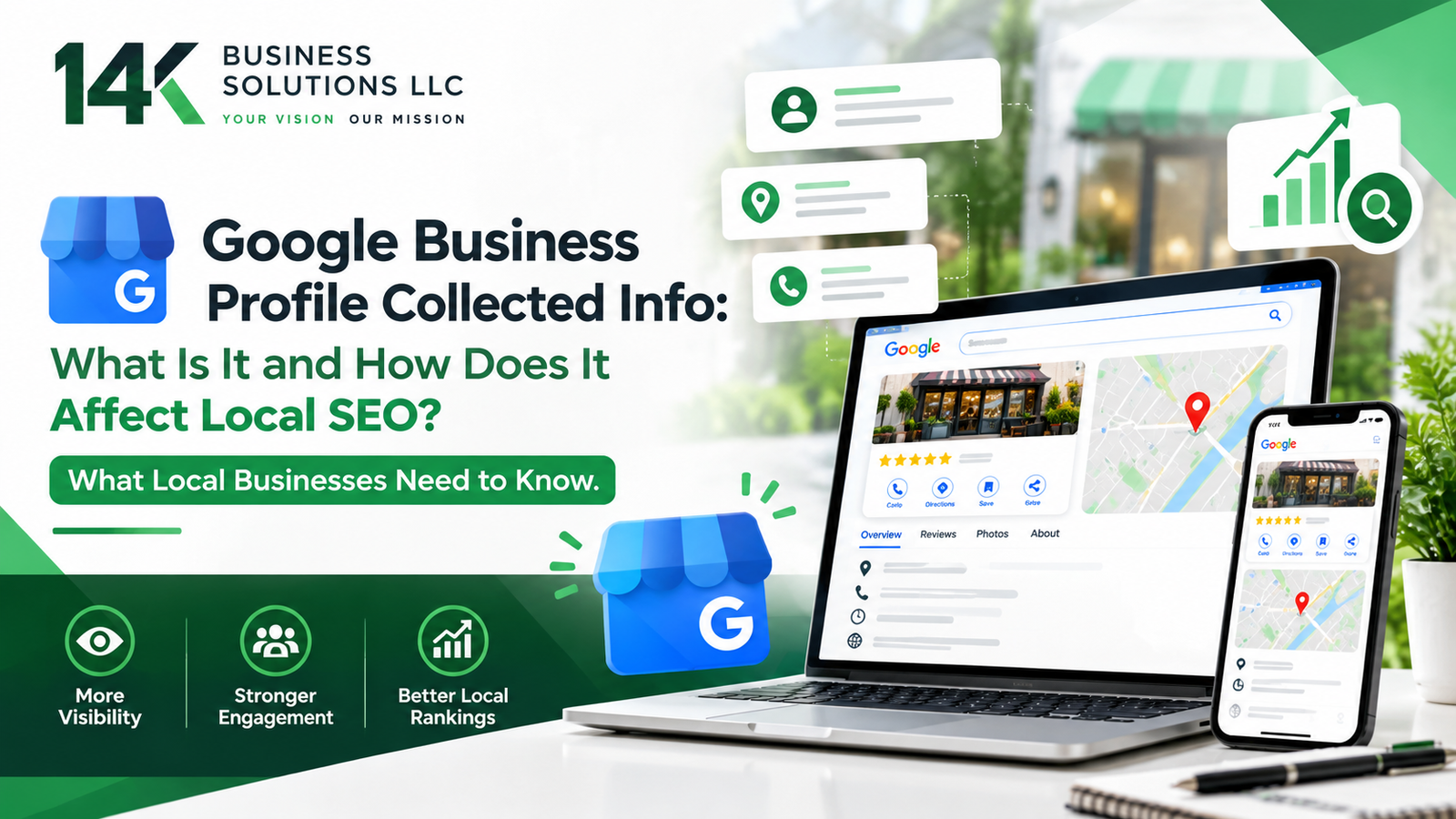
Google Business Profile Collected Info: What Is It and How Does It Affect Local SEO?

But there’s a part of the profile that barely gets talked about called Collected info. For businesses that have access to it, this section lets you review information Google has collected to help confirm your business details. A Local SEO Company Philadelphia may check this along with the rest of your profile to make sure the information customers see is accurate, because problems here can sit unnoticed for months and leave customers seeing outdated or inaccurate information.  What Collected Info Actually Means Google doesn’t just take your word for what your business details are. It also looks around the web for anything else connected to your name, your website, your social pages, directory sites, reviews people have left. It pulls all of that together to build a picture, one that goes past whatever you personally typed into the dashboard. Here’s the catch, though. That outside information doesn’t always agree with what you’ve entered. Some directory from years ago might still show a number you don’t use anymore. A review might casually mention hours that changed a while back. When Google runs into this kind of mismatch, it may use information from different sources to update the profile, which is why it’s worth keeping an eye on any changes. How Google Actually Gathers It Google is constantly crawling around the internet, picking up mentions of your business wherever they exist. Your website, random directory listings, customer reviews, it checks all of it and tries to line everything up into one consistent record. When information doesn’t match, Google may use details from different sources to help keep the profile accurate and up to date. Say your business changed locations last year. If some old listing site never got the update and still shows your previous address, that wrong detail could end up shaping part of your profile without you having a clue. This happens more than people think. It’s exactly why a Local SEO Company Philadelphia spends real time going through these details instead of assuming the profile is already fine. Why It Matters So Much for Local SEO Local search basically runs on trust. When your details match everywhere, your site, your directory listings, your reviews, Google has an easier time confirming you’re a real, active business. And that confirmation tends to show up as better placement when someone nearby is searching for what you do. Flip that around for a second. Someone finds your listing, sees one number, then runs into a completely different one somewhere else. Most people won’t bother sorting out which is correct. They’ll just call the next result instead. Search engines react in a similar way, and these small mismatches can slowly wear down how often your business gets shown locally, even if everything else about your business is solid. This is really where a Local SEO Company Philadelphia proves useful. Rather than spending hours hunting down every outdated mention across the internet, let someone who handles this daily catch these problems early. They can fix them before they start costing you actual customers. Accuracy Builds Trust, Just Not Overnight There’s a fairly obvious pattern once you look at it. Keep your business name, address, and phone number the same everywhere online. This signals to search engines that you’re legitimate and easy to reach. That kind of consistency doesn’t happen instantly. It builds up over months and eventually becomes part of what supports your rankings long term. Reviews factor into this more than people usually assume, too. A steady stream of genuine reviews, along with taking the time to reply to them, tells Google that your business is active and engaged. Google says that more reviews and positive ratings can help with local ranking. Replying to reviews also shows customers that you value their feedback. Keeping Things Accurate Without It Becoming a Chore None of this needs a complicated system. Check your profile every couple of weeks and compare it with what other sites are saying about your business. If something looks off, reach out and get it corrected. Keeping your own website updated matters a lot too, since Google relies heavily on it when verifying your business details. Reply to reviews when you get the chance, even short replies count. Swap in newer photos every so often. Double-check that your service descriptions and category still actually reflect what you offer today. None of these tasks take much time on their own. But together, they help keep your business information accurate and trustworthy wherever people happen to find it. Final Thoughts Collected information sounds like a small, technical thing, and in a way it is. But it quietly shapes how both customers and search engines see your business. Keep it accurate, keep it consistent, and over time it shows in your results. If sorting through all this feels like one more task you don’t have time for, 14K Business Solution is here to take it off your hands and keep your online presence working the way it should.
Read More »

Google Business Profile Post Views Are Back: What Local Businesses Need to Know

Imagine publishing an advertisement and never knowing if anyone actually looked at it. For a long time, that was the frustrating reality for merchants using Google Business Profile updates. The platform suddenly removed the ability to see how many people viewed your published posts. Thankfully, Google recently reversed course and has begun rolling post view counts out globally. This update gives business owners the hard data they desperately need to track online engagement. Understanding these numbers is vital for sustainable growth, which is exactly why utilizing professional local SEO services for small businesses is more critical than ever. How the Return of Post Views Transforms Local SEO Services for Small Businesses The removal of the post views metric by Google caught many business owners unawares, leaving them puzzled. With the absence of this important metric, gauging the effectiveness of their online marketing efforts became next to impossible. Now that this metric has returned, tracking the true impact of your local SEO services for small businesses is possible once again. You can finally see how often your updates, offers, and events are viewed, with the count shown on each post card in your Business Profile dashboard and combining Search and Maps views. Data drives every successful marketing campaign. When you know how many people actually see your content, you can easily adjust your strategy. If a post gets hundreds of views but little follow-up action, such as calls or website visits you track with UTM links, you know the post was seen, but the offer fell flat. Google is rolling this out gradually, so it may not be in every account yet. Counts cover the past 18 months, aren’t available through the API yet, and Google hasn’t defined exactly what counts as a view. Treat the numbers as a directional signal, not an exact headcount. Why Local SEO Services for Small Businesses Rely on Post Views Metrics reduce the costly trial and error from digital marketing. Post views are the starting point for agencies when they monitor your digital footprint. High view counts indicate that your profile appears in local searches, and low view counts indicate that you should improve your profile if you want to get exposure for your posts. Professionals monitor those trends over a period of time, including each day of the week and different photo types that attract local viewership. Using such information, they can come up with an effective strategy that would yield better results. The Core Benefits of Google Business Profile Posts There is money being left on the table if you’re not actively posting on your Google Business Profile. These posts are a free mini-billboard for your brand. When local customers search for your products, services, or your brand name on Google Search. Every time local clients look for your goods or businesses via Google Maps or search, they will instantly get to know you. Google posts give you the chance of reaching the people who are currently searching, which often means that they are more likely to buy than average social media users. Instagram and Facebook users usually just aim for some entertainment, while users of Google Maps are ready to spend their money. A good post that reaches an audience that is ready to purchase something has a great chance of being turned into a sale. Highlighting Time-Sensitive Offers Customers who see a limited-time discount directly in their search results feel compelled to click the link. That sense of urgency increases the chance they become paying customers. Promoting Local Events Have a holiday sale, grand opening, or in-store class? The details of the date, time, and location are easily visible in event posts. This can boost actual store visits, and it shows searchers that your business is active in the community. Showcasing New Products Product posts enable you to highlight particular products in a precise manner, with good pricing and images. This serves as a virtual window into the store. Your customers can view your most popular products before they enter your premises. Why Did Google Remove the Metric in the First Place? Google retired post views, along with post call-to-action interactions, on February 20, 2023, during its move away from the older Google My Business reporting infrastructure, and neither got a replacement. That left businesses without post-level data for more than three years. Owners and marketers kept asking for it back, and Google itself describes post view counts as one of its most requested features. How to Maximize Your Post Views Moving Forward You’re back in the game of tracking your local users, now it is time to fine-tune your daily content. Just publishing random posts won’t get you any visibility. It takes a strategic and intentional process to get noticed. Craft High-Quality Visuals Fuzzy, dim, or poorly cropped images will instantly kill engagement on the web. Google posts need vivid, clear, and polished pictures. Avoid stock photos unless necessary. Write Compelling, Short Headlines You only have a few brief seconds to grab a searcher’s attention. Keep your first sentence punchy, bold, and direct. Tell the customer exactly what value they get by reading the rest of the post. Always Include a Strong Call to Action A view is great, but a direct click is always better. Every single post needs a clear action button. Google provides standard options like “Learn More,” “Buy,” “Call Now,” or “Book.” Always choose the action button that aligns perfectly with your current business goal. The Role of Expert Guidance at 14KB Sol Running a Google Business Profile takes consistent, day-to-day work. Creating posts, designing graphics, and interpreting view counts all take time. As someone running a business, it is important to ensure that you focus on operating it rather than due to any sudden change in Google’s platform. In this regard, the expert team at 14KB Sol steps in to assist you. We fully understand all nuances of local search engine visibility. Our local search strategies are specifically created to help your business do

Read More »
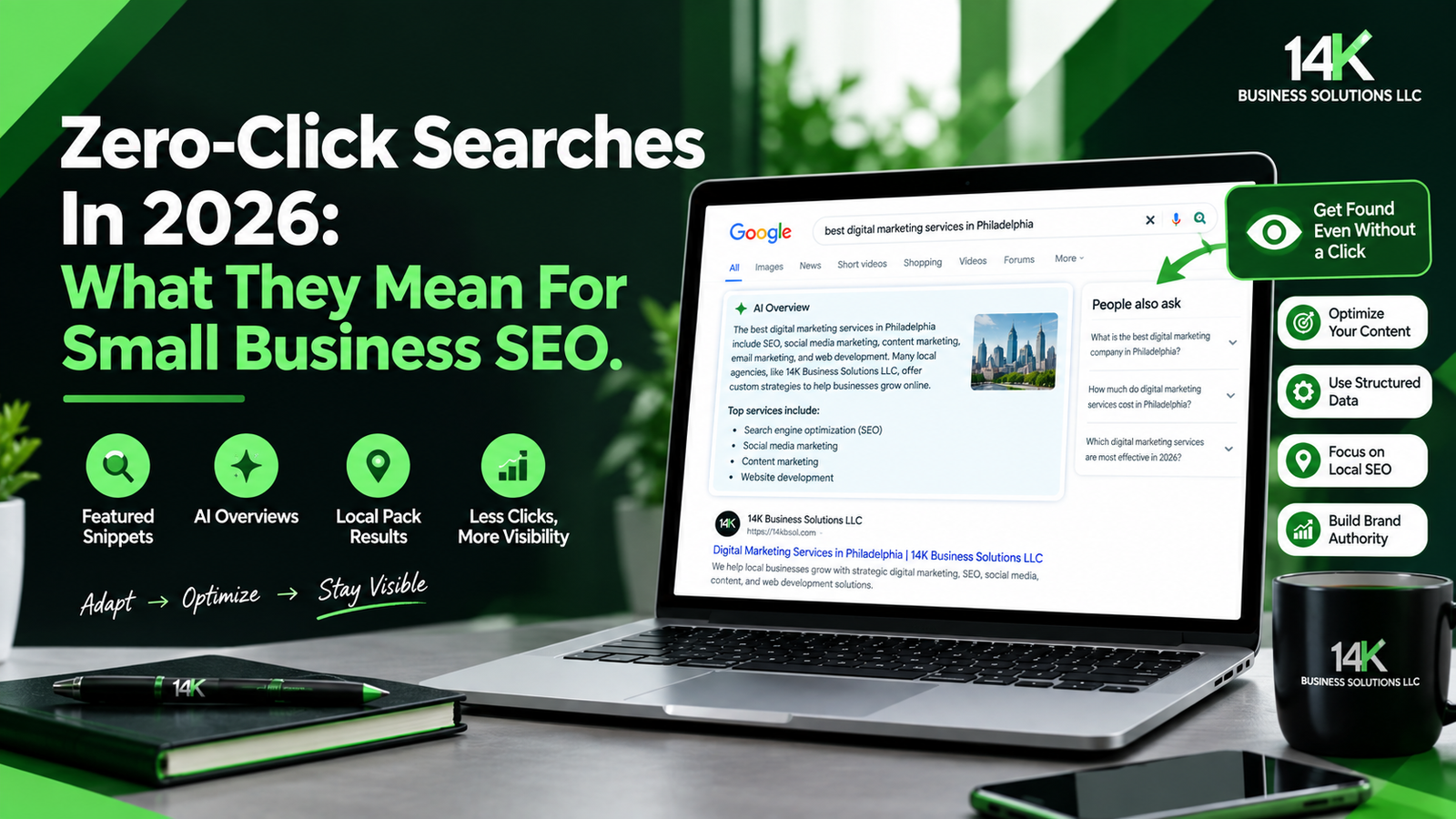
Zero-click searches in 2026 showing how small businesses can adapt their SEO strategies to improve visibility without website clicks.

Zero-Click Searches In 2026: What They Mean For Small Business SEO

Nearly seven out of ten Google searches now end without a single click to any website. That number alone should change how every small business owner thinks about SEO. Zero-click searches are not a future trend anymore; they are the current reality of 2026. This guide breaks down what zero-click searches 2026 actually look like, why they happened so fast, and what small businesses can still do to stay visible. What Zero-Click Searches Actually Mean For Your Business First, let’s define the term clearly. A zero-click search happens when a user gets their answer directly on the results page. They never visit any website at all. Google shows the answer through a featured snippet, a knowledge panel, or an AI Overview. According to recent research from SparkToro, Google searches ended without a click 68 percent of the time during early 2026. Ten years ago, that number sat closer to 45 percent. So, this is not a small shift. It is a 23-point jump in a single decade, and most of that increase happened in just the last two years. Because of this, zero-click search SEO now looks completely different from it did, even three years ago. Ranking first no longer guarantees a visitor. Your content might answer a question perfectly and still never get a click, because the answer already appeared right there on the search page. Why AI Overviews Are Driving This Shift So Fast AI Overviews sit at the center of this change. These AI-generated summaries now appear on a large share of search results, pulling information from multiple sources and displaying it directly above traditional listings. When an AI Overview shows up, organic click through rates drop significantly, sometimes by 18 to 28 percent compared to a normal search result page. Mobile searches feel this shift even harder. Zero-click rates on mobile devices run noticeably higher than on desktop, often reaching into the mid-seventies percentage range. This happens because mobile screens are smaller, so direct answers push traditional organic results further down the page. Additionally, mobile users tend to run quick, simple searches that AI systems can answer instantly without needing a click at all. Meanwhile, Google zero-click searches hit certain industries harder than others. Service based businesses, including lawyers, accountants, and consultants, see a large share of their informational content triggering direct answers instead of clicks. So, if your business relies heavily on informational blog content to drive traffic, this shift deserves your full attention right now. How Zero-Click Searches Affect Organic Traffic And Visibility Here is the part that worries most business owners. Small to mid-sized businesses are losing a real chunk of their potential organic traffic to this shift. The estimates suggest losses between 15 and 25 percent industry wide. Your SEO click-through rate can decline even while your rankings stay strong or even improve, since the click never happens in the first place. However, this does not mean SEO stopped working. It means the value of ranking has changed shape. Being cited inside an AI Overview still builds real brand recognition, even without a click. Businesses cited consistently in AI-generated answers have seen measurable increases in branded search volume and direct traffic within a month of consistent citations. So, search visibility now matters just as much as raw click volume, sometimes even more. Curious how your own site is performing under this shift? Checking your Search Console impressions against your actual clicks often reveals the zero-click gap clearly, showing rising visibility alongside falling traffic. Building a Zero-Click Search Strategy That Actually Works So, what should a small business actually do about this? First, shift your thinking toward AI Overviews and SEO working together rather than separately. Ideally, structure your content in a way that answers questions clearly and completely. AI systems favor content that gives a full answer without requiring extra digging. Crisp, clean, and concise! Next, lean into Google AI Overviews SEO by adding clear headings. Work towards adding only structured data to your pages. This makes your content easier for AI systems to extract and cite accurately. Third, strengthen your presence beyond your website entirely. Reviews, directory listings, and social proof all feed into AI search optimization, since AI systems weigh trust signals from across the web, not just your own site. A real zero-click search strategy also means tracking different metrics than before. Impressions, brand search growth, and citation frequency matter alongside clicks now, not instead of them. This shift in measurement helps you see the full picture of your visibility, even when a chunk of it never shows up as a traditional visit. Frequently Asked Questions How do zero-click searches affect SEO? Zero-click searches shift the goal of SEO from earning a click to earning visibility and citation. Your content can rank well and get seen inside an AI Overview or featured snippet without ever generating a website visit, which changes how success gets measured. How do zero-click searches affect organic traffic? Organic traffic often declines even when rankings hold steady or improve, since users get their answer directly on the search page. Small businesses may lose 15 to 25 percent of potential traffic this way, particularly on informational content. Why are zero-click searches increasing? AI Overviews and other direct answer features have expanded rapidly, now appearing across a large share of search results. As these features grow, more users get instant answers without needing to click through to a website at all. Adapting Your SEO Strategy For The Zero Click Era Zero-click searches and SEO are now permanently linked, and businesses that adapt early will stay ahead of competitors still chasing old click metrics. This shift is not the end of SEO, it is simply a new set of rules for staying visible. 14 K Business Solutions helps small businesses build small business SEO 2026 strategies designed specifically for this AI-driven search landscape. If your traffic numbers have felt confusing lately, reach out and let us help you understand exactly what your visibility actually looks like today.

Read More »
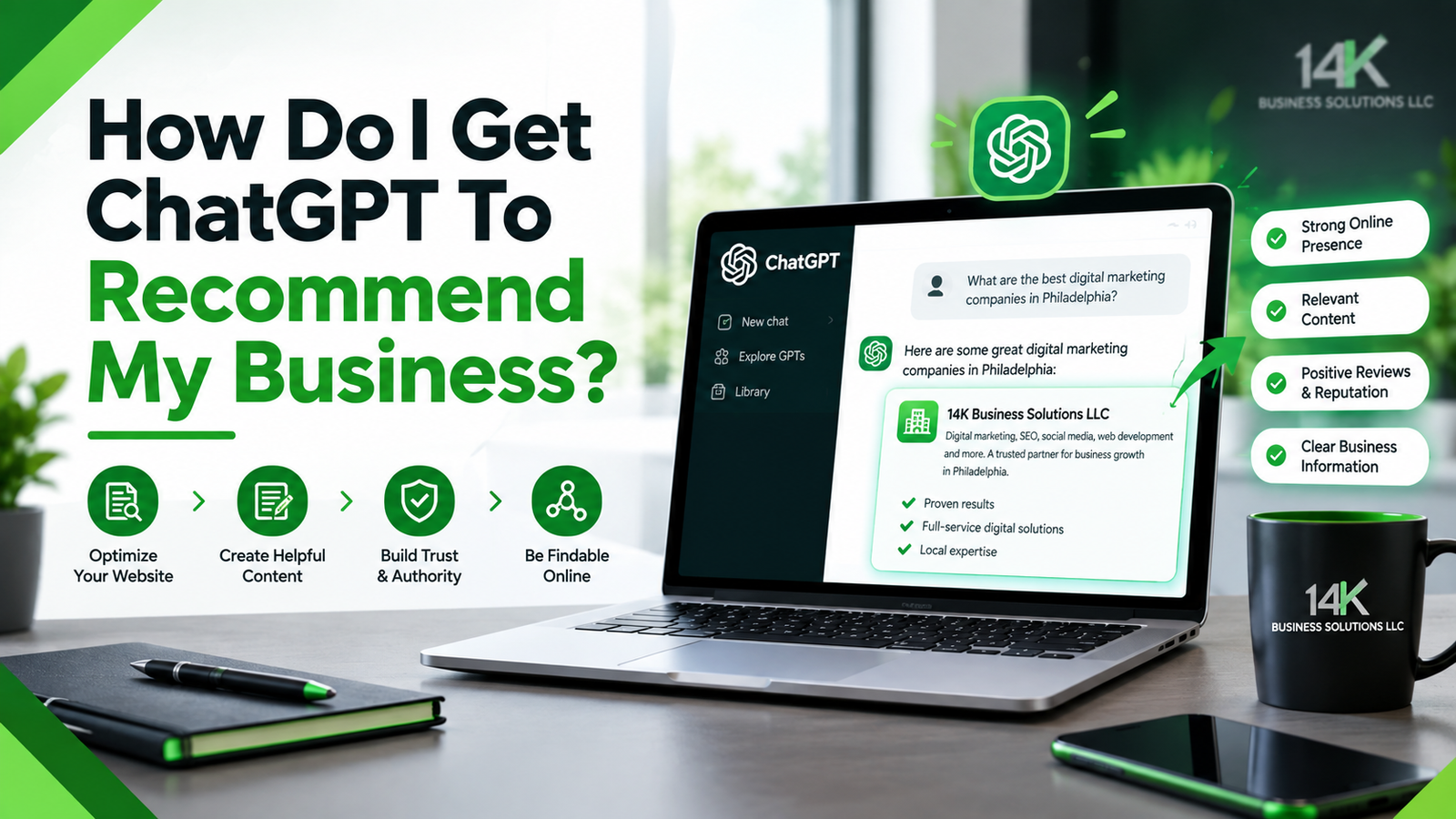
How to get ChatGPT to recommend your business using SEO, helpful content, online visibility, trust, and clear business information.

How Do I Get ChatGPT To Recommend My Business

Your next customer might not type anything into Google. Instead, they might open ChatGPT and ask who to call for your exact service in your exact city. An AI will answer that question. It will name someone. So, the real question is simple. Will that someone be you? This guide breaks down how ChatGPT SEO actually works. You will learn what how to appear in ChatGPT search really means, and how to build the authority that gets your business named. Why ChatGPT Recommends Some Businesses And Not Others First, understand how ChatGPT thinks. It does not rank pages the way Google does. Instead, it builds recommendations from patterns across your website, your reviews, and your presence on other trusted platforms. Because of this, AI search optimization works differently than traditional SEO. Google ranking measures how well one page answers one search. ChatGPT recommendations measure something broader. They measure how strongly your brand name connects to a category or a city. This connection lives inside the AI’s data and its live web results. So, you can rank first on Google and still get skipped by ChatGPT. You can also get mentioned by ChatGPT without ranking in the Google top ten. This is exactly why generative engine optimization, often shortened to GEO SEO, has become its own distinct skill. For clarity, AI systems need to understand five things about your business: Repeat your business type consistently everywhere, for example, local HVAC repair companies or B2B SaaS providers. This consistency builds real AI search visibility over time. What Actually Drives AI Search Engine Optimization Reviews carry enormous weight in this system. Studies show ChatGPT’s picks average around 4.3 stars, and businesses under roughly 150 reviews rarely get named at all. So, a steady flow of fresh reviews matters more than chasing a flawless five-star rating. Respond to every review too, since your replies become readable content that describes your services in plain language. Meanwhile, structured data plays a major role in LLM SEO. Schema markup helps AI models understand your business clearly, almost like handing them a map instead of raw text. Google’s AI Mode alone pulls most of its citations from pages ranking in the top twenty organic results. So traditional SEO still matters here too. Additionally, third-party mentions boost your AI brand visibility significantly. News articles, industry publications, and high authority directories all signal trust to AI systems. Being mentioned by an outside, credible source carries more weight than anything you say about yourself. Curious where your business currently stands? Ask ChatGPT directly who it recommends for your service in your city. That answer gives you a clear baseline to work from. Building Real Answer Engine Optimization Into Your Content Content style matters more than people expect. ChatGPT prefers clear, quotable sentences over vague marketing language. Write content that answers real buyer questions directly, the same way you would explain something to a friend. This approach sits at the heart of answer engine optimization. AI systems extract and cite short, confident statements far more often than long-winded paragraphs. Your Google Business Profile deserves special attention here too, since AI Mode pulls heavily from that data for local recommendations. Keep your hours, address, and services updated constantly. You may not think twice, but small inconsistencies across platforms send signals of untrustworthiness to AI systems. If how to get cited by ChatGPT is your specific goal, focus on becoming genuinely quotable and accurate. Also, structure your content with clear headings, direct answers, and links to related pages on your site. The approach helps both human readers and AI systems understand exactly what you have to offer. How Local SEO And Video Content Support AI Visibility Notably, strong local SEO feeds directly into AI recommendations. Work on location and service area clarity to get recommended for the service in your area. Consistent business information across Google, Bing Places, and major directories builds the foundation AI models rely on. Without this foundation, even great content struggles to get noticed. Video content is also gaining ground fast in this space. Working with a video seo company helps your business show up across another discovery channel entirely. AI systems increasingly reference video transcripts and descriptions alongside written content. Video SEO services that optimize titles, descriptions, and captions give your brand another strong path toward visibility. This applies both in Google AI Overviews and inside ChatGPT itself. Frequently Asked Questions What is ChatGPT SEO? ChatGPT SEO means building your online presence so ChatGPT confidently recommends your business. It relies on reviews, structured data, third party mentions, and consistent information across your website and directories. How can I get my business to appear in ChatGPT search? Focus on strong, recent reviews and a complete Google Business Profile. Write content in clear, quotable sentences. Consistency across every platform makes it far easier for ChatGPT to trust and recommend you. Does Google SEO help my business appear in ChatGPT? Yes, strong Google SEO helps. AI Mode pulls a large share of its citations from top-ranking organic results. However, ChatGPT also weighs reviews and third party mentions heavily, so Google rankings alone are not enough. How do I rank my business in ChatGPT? There is no paid placement option. Genuine authority signals are the only lever available. Build reviews, earn media mentions, keep your business information consistent, and publish content that answers real customer questions clearly. Getting Found Where Your Customers Are Actually Searching AI search is no longer optional. It is becoming foundational to how people discover businesses every day. Building real AI search visibility takes reviews, structured data, consistent information, and content written to be quoted, not just read. 14K Business Solutions helps businesses build exactly this kind of presence. This covers local SEO, Google Business Profile management, video seo services, and full generative engine strategy. If your business has not been optimized for how people search today, reach out. Let us help you get recommended, not skipped.

Read More »
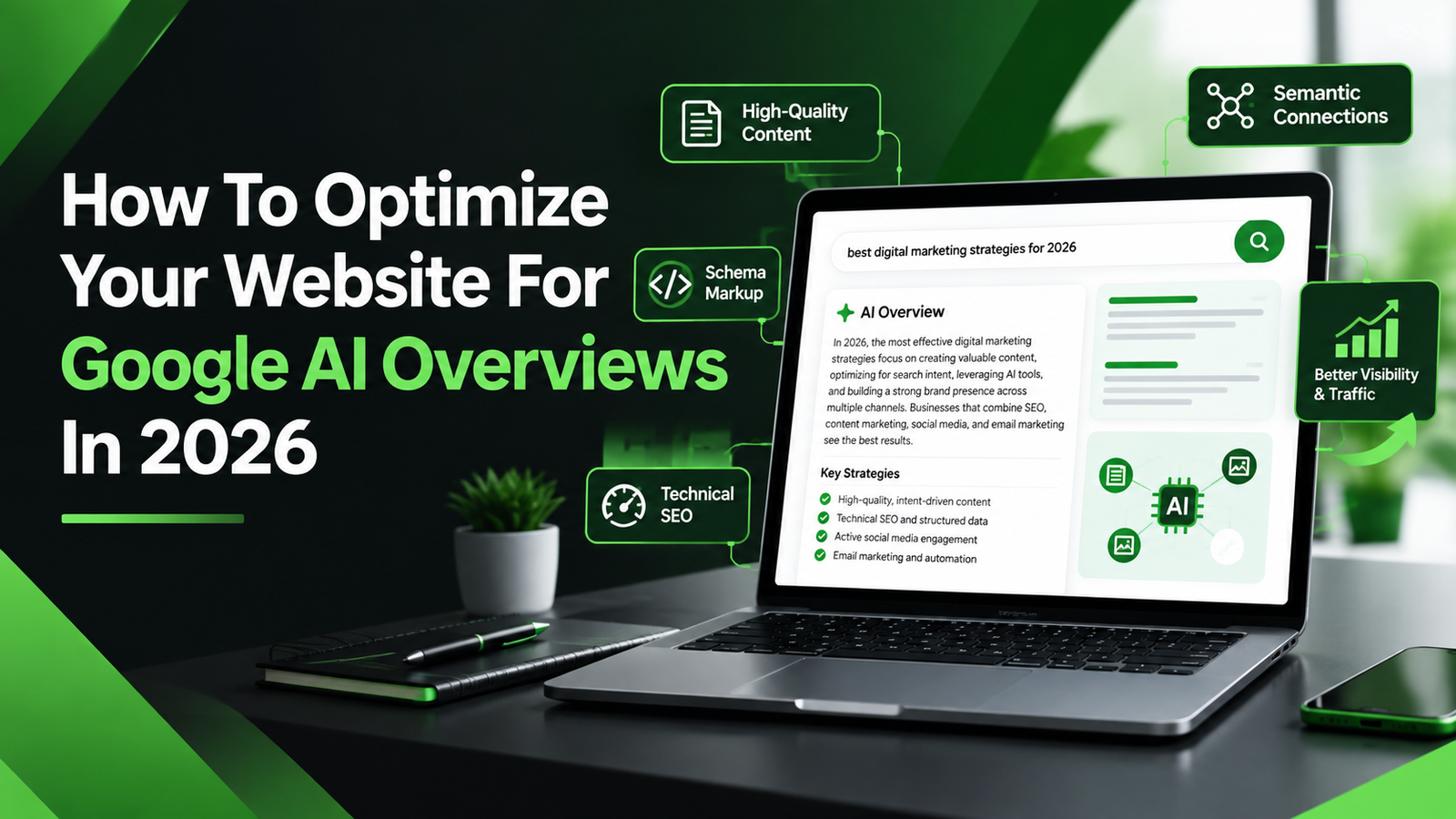
How to optimize your website for Google AI Overviews in 2026 with SEO, schema markup, high-quality content, and technical SEO.

How To Optimize Your Website For Google AI Overviews In 2026

Ranking on page one used to mean something simple. Get a click, get a visitor. That equation has quietly broken. A page can sit in the top three results and still get skipped, because Google’s AI summarizes the answer right there on the page. This shift is exactly why Google AI Overviews SEO matters so much right now. Understanding how to optimize for Google AI Overviews is becoming an important part of SEO alongside traditional search rankings. What Google AI Overviews Actually Reward AI Overviews pull answers from several credible sources. Then, they stitch those answers into one summary above the normal search results. However, getting cited in an AI Overview does not require a separate set of SEO tactics. Google’s existing search and quality systems still matter. Creating helpful, reliable content that clearly answers the user’s question can improve your chances of being useful in both traditional search and AI-powered results. Make important information easy to find and understand. Clear headings, direct explanations, and well-organized sections can also make the page easier for users to navigate. Accuracy and relevance also matter. Update content when information becomes outdated, especially when covering topics that change frequently. Dates and bylines can provide useful context for readers, but updates should reflect meaningful changes to the content. Therefore, generative engine optimization is not a one-time project. Instead, it is an ongoing habit. Refresh your statistics, links, and examples regularly. Furthermore, do not let old posts sit untouched for years. Ultimately, these approaches directly shape how to rank in Google AI Overviews, since stale content quickly passes them by. How To Structure Content For AI Overview SEO Clear content structure can support AI Overview SEO while making your pages easier for users to navigate. This approach makes important information easier for both readers and search systems to understand. When appropriate, use tables, numbered steps, or short lists to organize complex information clearly. Furthermore, structured data adds another layer of clarity. Specifically, add schema markup like Article, FAQPage, and Organization tags. This helps Google understand context and the relationships between different pieces of your content. Moreover, this step sits at the core of Google AI Overview optimization. Structured data hands the AI system a map instead of forcing it to guess at unstructured text.  Therefore, if you wonder whether your site is actually AI readable, a technical audit can show you exactly where the gaps sit. Building The Trust Signals That Get You Cited If you wonder how to get cited in Google AI Overviews, trust is where it starts. Notably, trust decides whether Google’s AI treats your content as reliable enough to reference. Author bios can give readers useful information about who created the content and their relevant experience. This can strengthen credibility, especially in health, tech, or science, where accuracy matters and incorrect information can have serious consequences. Your brand story also needs to stay consistent everywhere online. If your website claims one thing but your Google Business Profile says another, both Google and your audience start wondering which version is true. Google reviews plug directly into this bigger picture. A steady drumbeat of authentic feedback shows you are actively serving customers and earning their trust. Those reviews strengthen the exact credibility markers AI systems weigh before deciding to cite you. At the same time, watch out for typical Google Business Profile mistakes such as missing details, stale hours, or conflicting addresses might look minor, but they steadily erode the same trust you are trying to build. Avoiding The Mistakes That Keep Businesses Invisible Many businesses lean on generic AI tools to churn out content fast. They assume volume alone drives visibility. That approach usually backfires. AI Overviews reward depth and completeness over sheer quantity. Thin, repetitive content rarely earns a citation, no matter how many pages you publish. Wondering how to get featured in Google AI Overviews without falling into that trap? Focus on fewer, genuinely thorough pieces instead of flooding your site with shallow content. Blocking AI crawlers entirely is another common mistake. Some businesses restrict crawler access, thinking it protects their content. But this can also block the citation opportunities they are chasing. Weigh that protection against visibility before you leave the setting unchecked. Frequently Asked Questions What are the Google AI Overviews ranking factors? Google AI Overviews SEO depends on semantic completeness, content freshness, structured data, and trust signals. Important to note that author expertise and consistent branding all carry real weight. Also, pages that answer questions completely and stay current tend to perform best. How do I get my website featured in Google AI Overviews? There is no guaranteed way to get featured in Google AI Overviews. Follow Google’s established SEO best practices, publish helpful and reliable content, make important information easy to understand, and ensure your pages can be crawled and indexed. What is Google AI Overviews SEO? Google AI Overviews SEO refers to optimizing your website and content with AI-powered search experiences in mind while continuing to follow established SEO best practices.  Getting Your Business Seen In The New Search Landscape Search has changed fundamentally. How to appear in Google AI Overviews now depends on structure, trust, and freshness working together, not keywords alone.  A strong Google AI Overviews SEO strategy can help businesses improve their visibility as AI-powered search continues to evolve.  14 K Business Solutions helps businesses build content and technical strategies designed for this new landscape, from Google Business Profile management to full generative engine optimization planning. If your site has not been optimized for Google AI Overviews SEO and how people search today, reach out and let us help you get seen where it actually counts.  

Read More »

What Are The Top 10 Web Design Mistakes

A website can look great at first glance and still lose visitors within seconds. Small mistakes add up fast, quietly pushing people away before they even see what your business actually offers.  Here are the ten most common web design mistakes, grouped into a few key areas, so you know exactly where to start fixing things. Mistakes That Hurt User Experience Curious where your own site stands on these issues? A quick usability review usually turns up problems most business owners never even noticed. Technical Mistakes That Quietly Cost You Traffic Strategic Mistakes That Affect Long Term Growth Sites that sit untouched fall behind competitors who keep sharpening their design and content. Working with a digital marketing and advertising company that treats your site as something living, not a launch and forget project, keeps you ahead instead of scrambling to catch up.  Curious how your site stacks up against competitors who are actively updating theirs? That comparison alone tends to reshuffle what businesses prioritize next. Frequently Asked Questions How can poor web design affect user experience and conversions? Poor design frustrates visitors, making it hard to find information or complete a purchase. This frustration leads to higher bounce rates and lost conversions, since visitors leave rather than fight through a confusing or slow experience. Can bad website design hurt SEO and Google rankings? Yes, factors like slow load times, poor mobile responsiveness, and broken links directly affect search rankings. Google prioritizes sites that offer a smooth experience, so design issues can quietly push a site further down the results page. How does website speed affect web design and conversions? Speed directly affects how long visitors stay on a page. Slow sites lose visitors within seconds, and that lost traffic rarely converts into sales or leads. Fast, well optimized design keeps visitors engaged long enough to actually take action. Fixing These Mistakes Before They Cost You More Visitors Small mistakes quietly chase customers away every single day they go unfixed. The good news, every single one on this list has a clear fix.  14 K Business Solutions helps businesses build websites that actually convert, covering everything from user experience to technical performance to long term strategy. If your site has been underperforming, reach out today and let us show you exactly what needs fixing.

Read More »
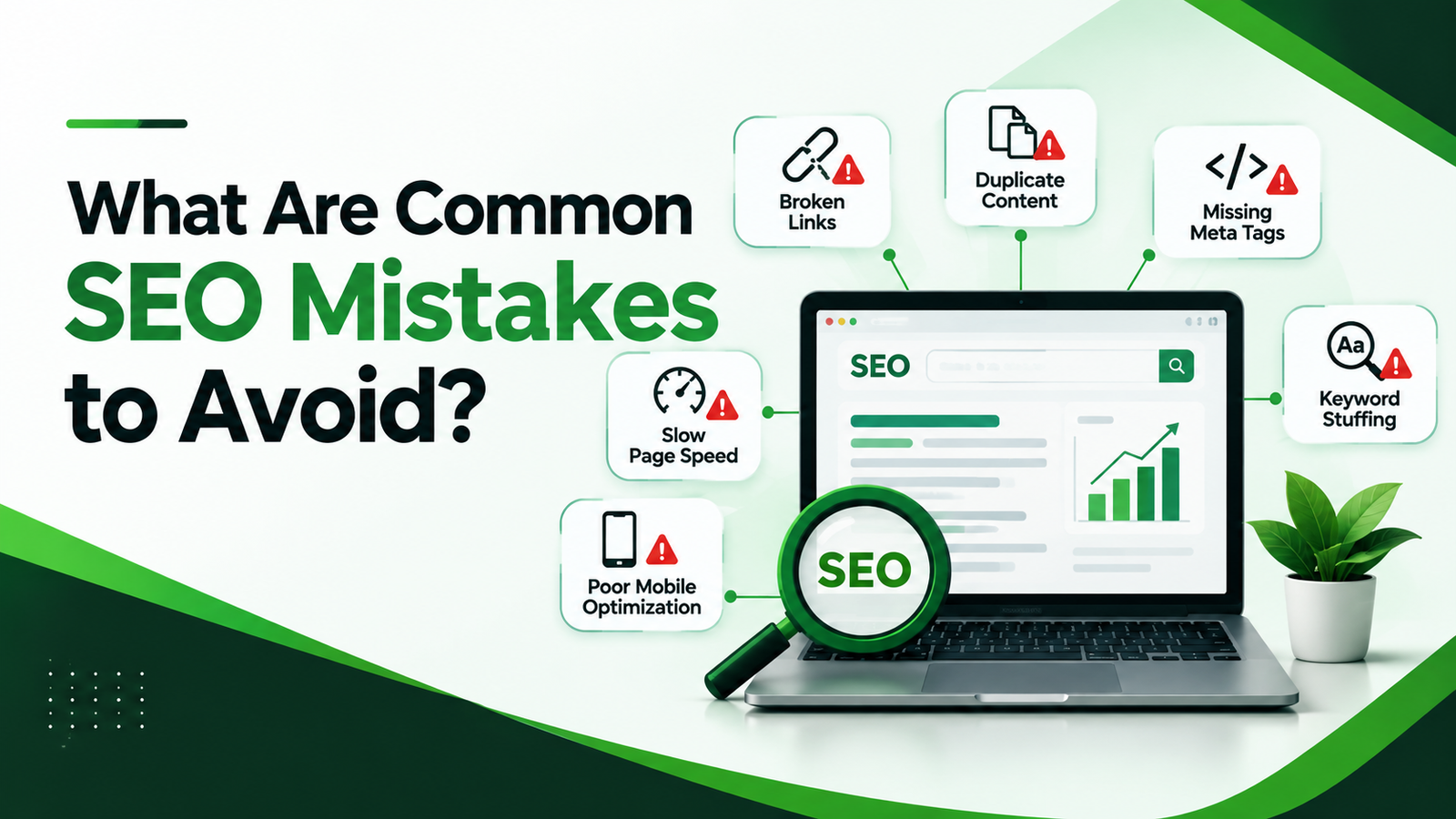
Common SEO mistakes to avoid, including broken links, duplicate content, missing meta tags, slow page speed, and keyword stuffing.

What Are Common SEO Mistakes To Avoid

A website can look beautiful and still sit buried on page five of Google. That gap between good design and good rankings trips up more businesses than you would expect. Most SEO mistakes are not complicated. They are small, avoidable errors that quietly cost real traffic every single month. SEO is not some alien jargon anymore. With each update, SEO and its work have become logical, relevant, and close to search intent. The checklist is simple: if you work with an SEO agency who is well-versed in recent changes in the SEO landscape, you are sorted.   Let’s walk through the most common mistakes businesses make, and how to actually fix them. Ignoring Local SEO Basics Many businesses skip local optimization entirely, even when most of their customers live nearby. This mistake shows up constantly among small businesses trying to compete for local search results. Skipping a Google Business Profile, or leaving it incomplete, ranks as one of the biggest missed opportunities out there. Setting up GMB doesn’t work either.  Most of the steps to set up a GMB account require simple details such as a URL, email, physical address, phone number, and such. With a proper GMB, which outlines the intent of your business and services, Google signals your services to locals organically. Local citations matter too, and businesses often forget to keep their name, address, and phone number consistent across directories. You may think Yellow Pages were a thing of the past, think again! Even small mismatches confuse search engines and hurt rankings. If your business relies on nearby customers, working with a team that understands local SEO services can close this gap fast. Want to see where your local listings currently stand? A quick audit usually reveals more gaps than business owners expect. Chasing Keywords Instead Of Search Intent Stuffing a page with keywords used to work. It does not anymore. Google now prioritizes content that actually answers what someone is searching for, not content that repeats a phrase over and over hoping to rank. The mistake still shows up constantly, especially on older websites that never got updated for modern search behavior. Understanding search intent means asking what a visitor actually wants when they type a query. Someone searching the best seo agency near me wants options and comparisons, not a generic sales pitch. Working with an experienced seo agency helps businesses shift from keyword stuffing toward content that genuinely serves the reader. The approach is exactly what search engines reward today. Neglecting Technical SEO And Site Speed A slow website loses visitors before they even see your content. Studies consistently show that visitors abandon pages that take more than a few seconds to load. Yet technical issues like slow load times, broken links, and missing meta descriptions get overlooked constantly, even by businesses investing heavily in content. Mobile optimization deserves attention here too. More searches happen on phones than desktops now, and a site that looks broken on mobile loses trust immediately. Businesses searching for an SEO services Philadelphia provider should specifically ask how technical audits factor into their process. Content alone cannot fix a site that loads slowly or breaks on mobile devices. Overlooking Video And Visual Content Text-heavy pages are not the only way to rank anymore. Video content increasingly shows up in search results, and businesses ignoring this format miss real visibility. Google now surfaces video content directly in search results for many queries, giving businesses another path to the top of the page. Partnering with a video SEO company helps businesses tap into this growing opportunity. Moreover, optimizing video titles, descriptions, and transcripts so they actually rank rather than sitting unseen on a platform. If your business has not explored video content yet, now is a smart time to start, since competitors are already claiming that space. Frequently Asked Questions What are the most common SEO mistakes to avoid? One of the most common mistakes is ignoring local SEO. Nowadays, SEO is no longer about stuffing keywords instead of matching search intent. Neglecting technical issues like site speed and skipping video content hurts SEO massively. How can I identify SEO problems on my website? Best to start with a technical audit. First, check site speed, broken links, and canonical tags. Second, mobile usability is a key element to look at. Lastly, review the content for outdated information and weak keyword targeting. How often should SEO content be updated? Most content benefits from a review every six to twelve months. Moreover, competitive topics may need more frequent updates. Refreshing statistics, links, and examples keeps content relevant and signals to search engines. Fixing These Mistakes Before They Cost You More Traffic You may not realize it, but these small SEO mistakes add up fast. They impact traffic quietly, pulling visitors away from your site every month if these issues go unfixed. The good news is that every mistake covered here has a clear, practical fix. 14 K Business Solutions helps businesses catch these issues early, building strategies around real local visibility, search intent, technical performance, and video content. If your rankings have been stuck, reach out today and let us show you exactly where the gaps are.

Read More »
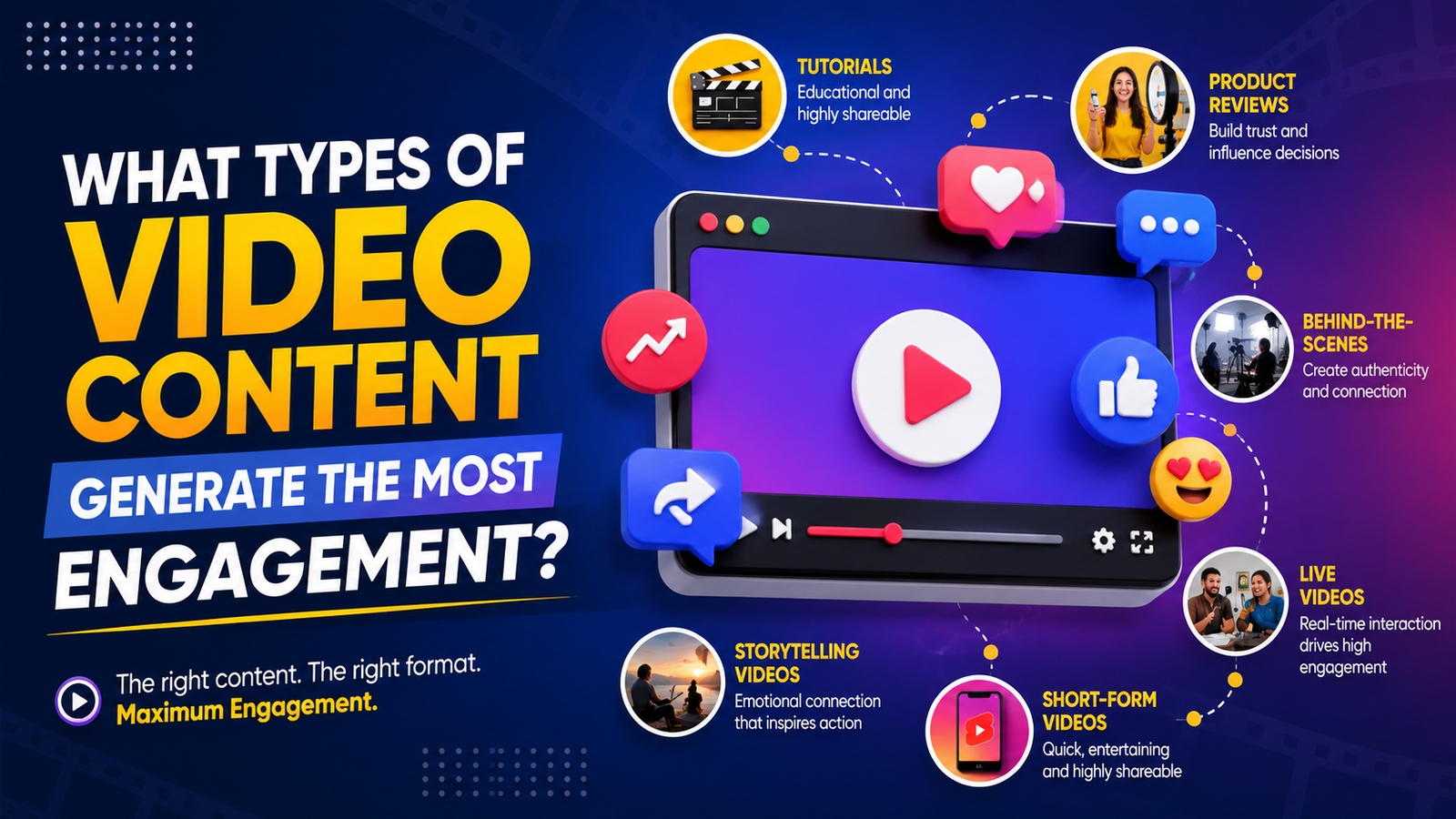
Think about the last video that made you stop scrolling. It probably did not need a long introduction or expensive production. It simply gave you a reason to pay attention right away. People stop for videos because they're quick and easy to watch. But grabbing someone's attention is only the first step. If the video doesn't give them a reason to stay, they'll simply keep scrolling.  A strong video content marketing strategy starts with understanding what your audience actually wants to see. Some people respond to quick tips. Others prefer customer stories, product demonstrations, or a look behind the scenes. Here are some of the video formats that continue to generate strong engagement across social platforms. Short-Form Videos Short-form content works because it gets to the point quickly. Platforms such as Instagram Reels, TikTok, Facebook Reels, and YouTube Shorts are built around fast, mobile-first viewing. The first few seconds matter most. If viewers do not understand what the video is about almost immediately, they will probably move on. Popular video content examples include: Quick “Did You Know?” facts Before-and-after transformations Product teasers Short behind-the-scenes clips Trending audio with a brand-related idea One-question, one-answer videos Short-form content is also easier to test. You can try different hooks, topics, captions, and filming styles without putting weeks into a single post. Over time, those small experiments show you what your audience responds to most. Educational and How-To Videos  Helpful videos almost always perform well. If you can answer a common question, explain something clearly, or show people how to do something, there's a good chance they'll keep watching.  At the same time, people begin to see your business as a helpful resource rather than a company that is only trying to sell to them. Some video ideas you could try include: Product demonstrations: Let people see the product in use instead of simply listing its features. Quick tips: Share one helpful idea they can put into practice right away. Myth-busting videos: Address a common misconception people have about your industry. Step-by-step tutorials: Show viewers how to complete a task without overcomplicating it. Frequently asked questions: Choose one question customers ask often and answer it in a clear, simple way. You probably already have plenty of ideas for this type of content. Check your inbox, comments, and sales conversations. If the same question keeps coming up, it is a good sign that people would watch a video about it. Educational videos can also stay useful for much longer than trend-based content. A helpful tutorial may continue bringing in views months later because people are still searching for the answer. Behind-the-Scenes Content Not every video has to look like a professionally made advertisement. Many people are just as interested in the people behind the business as they are in the product or service itself. Showing what happens behind the scenes gives your audience a better idea of who you are and what your day-to-day work actually looks like. Some simple behind-the-scenes video ideas include: Employee introductions A typical day at work Packing customer orders Preparing for an event Office celebrations Work in progress How a service is delivered These videos don't have to be perfect. In fact, the moments that feel the most natural are often the ones people connect with the most. A quick look at your team, your workspace, or the process behind your work can make your business feel more approachable and relatable. Customer Testimonials and Case Studies Before choosing a business, most people want to know what the experience is actually like. Hearing from someone who has already been through the process can answer questions that a sales page never could. The best testimonial videos don't sound rehearsed. Instead of handing customers a script, let them tell their story in their own words. Ask what challenge they were trying to solve, why they chose your business, what stood out about the experience, and whether they would recommend you to someone else. Customer stories give potential buyers a chance to hear directly from people who were once in the same position. That kind of honest feedback can help someone feel more confident about taking the next step. Written reviews are still valuable, but seeing and hearing a real customer talk about their experience often feels more genuine and memorable.. Videos That Invite Participation The best videos do not always speak at the audience. Sometimes, they start a conversation. Interactive content encourages viewers to comment, vote, answer, guess, or share an opinion. That participation can increase watch time and help the post reach more people. Interactive video content examples include: Polls Quizzes “Choose one” questions Challenges Q&A videos This-or-that comparisons Guess-the-answer clips Comment-based follow-ups The interaction does not need to be complicated. Even a simple question at the end of a video can encourage more comments. For example, instead of ending a product video with “Shop now,” you could ask, “Which option would you choose?” That small change gives viewers a reason to respond. Why You Should Mix Different Video Styles Posting the same type of video all the time can start to feel repetitive. You might share a quick tip one week, then switch to a customer story, product demo, team introduction, or behind-the-scenes clip the next. The right format depends on what you want the video to do. Some videos help you reach new people. Others answer questions, build trust, or simply give viewers a better feel for your business. Using a mix keeps your content fresh and helps you avoid falling into the same pattern. It also shows you what your audience actually enjoys. You may find that tutorials get more saves, while casual team videos bring in more comments. The only way to know is to try a few different approaches and pay attention to the response. Common Video Marketing Mistakes A video can look polished and still fall flat. Most of the time, the problem is not the camera or the editing. It is that the video takes too long to get anywhere or never gives people a reason to keep watching. Some brands spend the first few seconds introducing themselves when viewers are still deciding whether to stay. Others pack too much into one video, forget that many people watch without sound, or copy the same format across every platform. Even a good video can lose momentum if it feels too promotional or ends without telling the viewer what to do next. Before filming, be clear about the one thing you want people to take away. When the message is focused, the video feels easier to follow and far more natural. A Quick Check Before You Publish Before posting your next video, ask yourself a few simple questions: Does the opening give people a reason to stop? Is the main point clear within the first few seconds? Does the video teach, entertain, explain, or solve something? Is the message easy to follow? Does the viewer know what to do next? Would someone find it useful enough to save or share? You do not need a “yes” to every question, but the video should give viewers something worthwhile. Frequently Asked Questions What are the four main types of content? Most content falls into four broad categories: educational, inspirational, entertaining, and promotional. Using a mix of all four keeps your content interesting while supporting different business goals. What are some good topics for videos? Good topics often come from real customer questions and everyday business activity. You could create videos about product features, common mistakes, industry myths, customer success stories, team members, new services, or behind-the-scenes processes. The most useful video content ideas usually focus on something the audience already wants to know. What is the best format for social media videos? Vertical video usually works best for Instagram Reels, TikTok, Facebook Reels, and YouTube Shorts because most people view these platforms on their phones. Keep the framing clear, include captions, and make the opening easy to understand. Studying successful video content examples can help, but your own performance data will tell you what works best for your audience. Turn Your Video Ideas Into a Clear Strategy There is no single video format that works for every business. Some audiences respond to quick tips. Others prefer customer stories, tutorials, or informal behind-the-scenes content. The best approach is to try different formats, pay attention to how viewers respond, and create more of what holds their attention. At 14 K Business Solutions, we help businesses plan, create, and improve video content for social media. From developing video content ideas to building a complete video content marketing strategy, our team focuses on content that feels relevant to the audience and supports real business goals.

What Types of Video Content Generate the Most Engagement?

Think about the last video that made you stop scrolling. It probably did not need a long introduction or expensive production. It simply gave you a reason to pay attention right away. People stop for videos because they’re quick and easy to watch. But grabbing someone’s attention is only the first step. If the video doesn’t give them a reason to stay, they’ll simply keep scrolling.  A strong video content marketing strategy starts with understanding what your audience actually wants to see. Some people respond to quick tips. Others prefer customer stories, product demonstrations, or a look behind the scenes. Here are some of the video formats that continue to generate strong engagement across social platforms. Short-Form Videos Short-form content works because it gets to the point quickly. Platforms such as Instagram Reels, TikTok, Facebook Reels, and YouTube Shorts are built around fast, mobile-first viewing. The first few seconds matter most. If viewers do not understand what the video is about almost immediately, they will probably move on. Popular video content examples include: Short-form content is also easier to test. You can try different hooks, topics, captions, and filming styles without putting weeks into a single post. Over time, those small experiments show you what your audience responds to most. Educational and How-To Videos  Helpful videos almost always perform well. If you can answer a common question, explain something clearly, or show people how to do something, there’s a good chance they’ll keep watching.  At the same time, people begin to see your business as a helpful resource rather than a company that is only trying to sell to them. Some video ideas you could try include: You probably already have plenty of ideas for this type of content. Check your inbox, comments, and sales conversations. If the same question keeps coming up, it is a good sign that people would watch a video about it. Educational videos can also stay useful for much longer than trend-based content. A helpful tutorial may continue bringing in views months later because people are still searching for the answer. Behind-the-Scenes Content Not every video has to look like a professionally made advertisement. Many people are just as interested in the people behind the business as they are in the product or service itself. Showing what happens behind the scenes gives your audience a better idea of who you are and what your day-to-day work actually looks like. Some simple behind-the-scenes video ideas include: These videos don’t have to be perfect. In fact, the moments that feel the most natural are often the ones people connect with the most. A quick look at your team, your workspace, or the process behind your work can make your business feel more approachable and relatable. Customer Testimonials and Case Studies Before choosing a business, most people want to know what the experience is actually like. Hearing from someone who has already been through the process can answer questions that a sales page never could. The best testimonial videos don’t sound rehearsed. Instead of handing customers a script, let them tell their story in their own words. Ask what challenge they were trying to solve, why they chose your business, what stood out about the experience, and whether they would recommend you to someone else. Customer stories give potential buyers a chance to hear directly from people who were once in the same position. That kind of honest feedback can help someone feel more confident about taking the next step. Written reviews are still valuable, but seeing and hearing a real customer talk about their experience often feels more genuine and memorable.. Videos That Invite Participation The best videos do not always speak at the audience. Sometimes, they start a conversation. Interactive content encourages viewers to comment, vote, answer, guess, or share an opinion. That participation can increase watch time and help the post reach more people. Interactive video content examples include: The interaction does not need to be complicated. Even a simple question at the end of a video can encourage more comments. For example, instead of ending a product video with “Shop now,” you could ask, “Which option would you choose?” That small change gives viewers a reason to respond. Why You Should Mix Different Video Styles Posting the same type of video all the time can start to feel repetitive. You might share a quick tip one week, then switch to a customer story, product demo, team introduction, or behind-the-scenes clip the next. The right format depends on what you want the video to do. Some videos help you reach new people. Others answer questions, build trust, or simply give viewers a better feel for your business. Using a mix keeps your content fresh and helps you avoid falling into the same pattern. It also shows you what your audience actually enjoys. You may find that tutorials get more saves, while casual team videos bring in more comments. The only way to know is to try a few different approaches and pay attention to the response. Common Video Marketing Mistakes A video can look polished and still fall flat. Most of the time, the problem is not the camera or the editing. It is that the video takes too long to get anywhere or never gives people a reason to keep watching. Some brands spend the first few seconds introducing themselves when viewers are still deciding whether to stay. Others pack too much into one video, forget that many people watch without sound, or copy the same format across every platform. Even a good video can lose momentum if it feels too promotional or ends without telling the viewer what to do next. Before filming, be clear about the one thing you want people to take away. When the message is focused, the video feels easier to follow and far more natural. A Quick Check Before You Publish Before posting your next video, ask yourself a few simple questions: You do not need a

Read More »
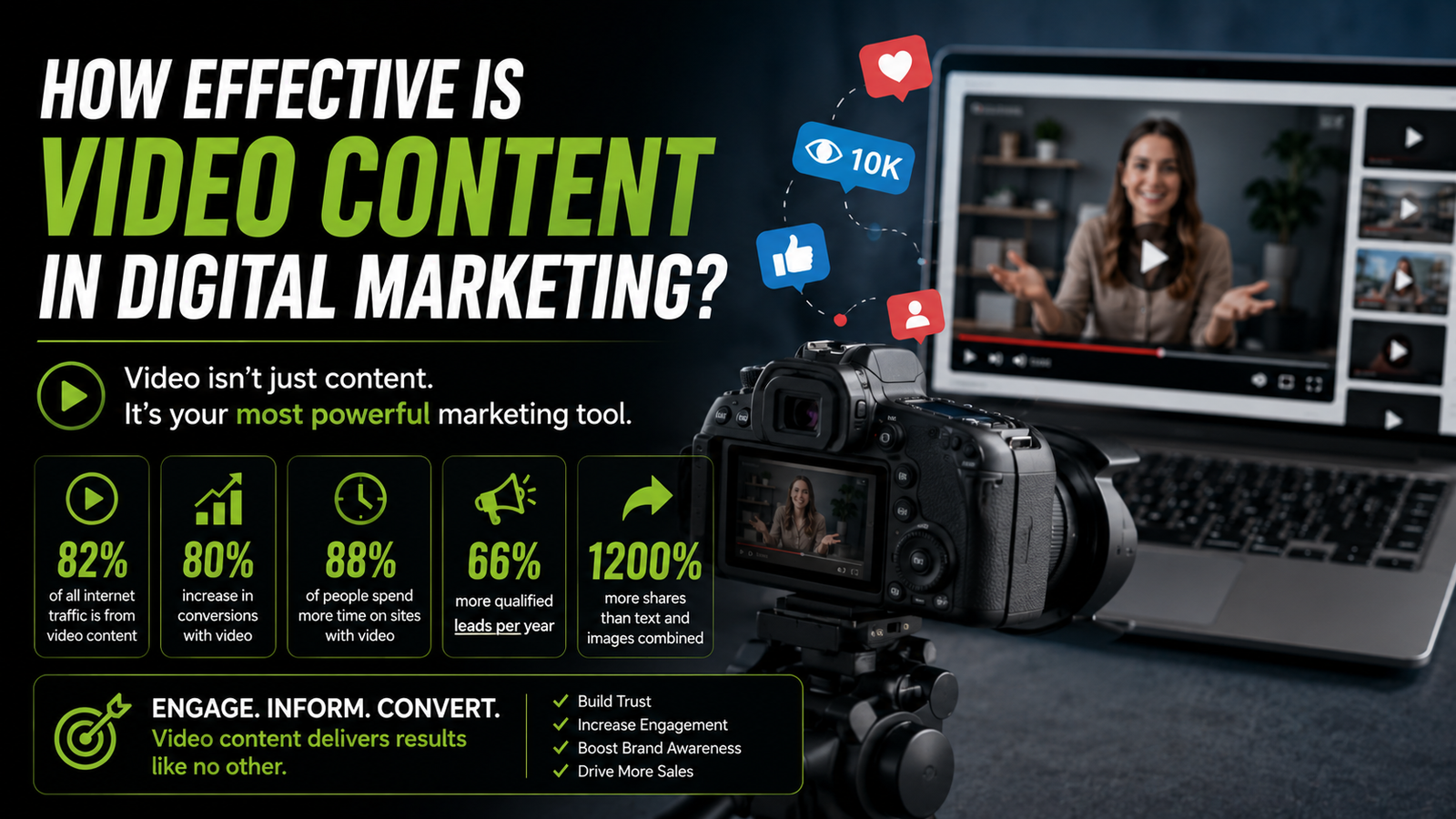
Video content in digital marketing showing a camera, social media engagement, audience views, and conversion metrics.

How Effective is Video Content in Digital Marketing?

Ever wondered why it seems certain digital brands get instant attention while others fail to stand out at all? 99% of the time, it comes down to their skillful combination of motion and sound. Static pictures and paragraphs of text don’t always catch attention these days, but a moving visual could be all it takes. On digital channels, video is among a handful of other types of visual media that outshines 95% of other channels for conversion rates, audience memory, and brand engagement. Implementing strategic video marketing allows brands to explain complex concepts quickly, showcase real human emotions, and build immediate trust with potential buyers. At 14KBSol, we help brands harness moving media to transform passive viewers into loyal customers. The Unmatched Power of Visual Engagement Human brains process visual imagery thousands of times faster than written text. When someone watches a clip, they retain a massive percentage of the message compared to reading the same information in an article. This core psychological reaction explains the main benefits of video marketing across every major industry. By including moving visuals, you create a more all-in-one experience. Prospects will hear your voice, see your solution live, and digest your brand’s personality almost instantaneously. Moreover, both social channels and all search engines consider clips for their algorithms, granting you substantially more exposure. Key Pillars of a Winning Campaign Simply posting random clips online will not magically produce a return on investment. To achieve real commercial success, you need a structured video marketing strategy aligned directly with your sales funnel. A well-crafted strategy targets specific customer touchpoints: By organizing your media pipeline this way, you guide prospects naturally from initial interest to a final purchase decision. Real-World Applications That Drive Conversions To see how impactful this medium can be, let’s explore proven video marketing examples that deliver measurable business results: Leveraging these formats as part of your broader video content marketing efforts ensures that your content educates while actively driving revenue. Strategic Impact Across Business Scales Whether you operate a global enterprise or a neighborhood shop, dynamic clips act as a massive equalizer. Utilizing video marketing for small business growth allows local companies to compete directly with massive corporations. A genuine, human short-form clip shot right on a smartphone can easily outshine a million-dollar corporate ad if the message resonates with the audience. Looking ahead at video marketing trends 2026, authenticity and personalized short-form content dominate digital channels. Nobody wants to be subjected to yet another perfectly produced, heavily edited commercial that feels entirely unnatural. Companies offering on-the-fly livestreams, buyable video, and bite-sized vertical videos have a significant advantage right now. FAQ: Mastering Video in Digital Marketing Why is video marketing so powerful? Utilizes audio, visuals, and storytelling with emotion and achieves in much less time the same results that a static text or image can do. This all-in-one power pack results in increased message retention, social shares, and a dramatic increase in conversion rates on sales channels. Why is video content important in digital marketing? Algorithms across Google, Instagram, TikTok, and LinkedIn heavily prioritize visual motion over text posts. Using strategic clips increases website dwell time, improves organic search rankings, and delivers clearer product insights to prospective buyers. Elevate Your Digital Strategy with 14KBSol Campaigns that truly deliver must be built on a bedrock of smart storytelling and skilled production, supported by savvy distribution strategies. Partnering with the best digital agency means you receive media materials that will drive quantifiable, measurable business results. At 14KBSol, our team builds data-driven campaigns designed to elevate your brand visibility and maximize conversion potential. From initial concept development to precise target distribution, we optimize your video marketing pipeline for maximum impact. Ready to transform your digital presence? Contact 14KBSol today to craft a custom video marketing strategy that drives lasting results!

Read More »
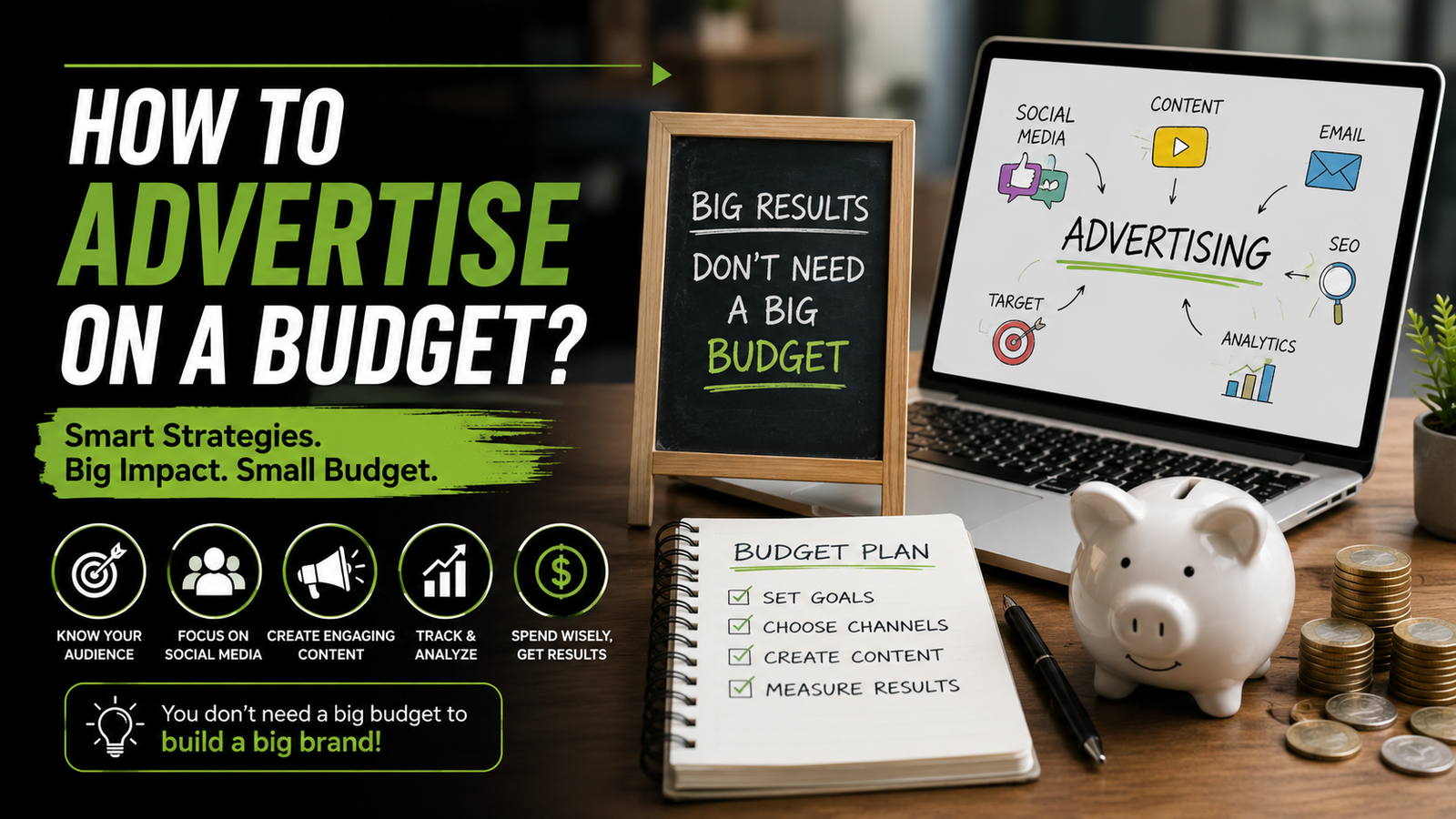
Budget-friendly advertising strategies using social media, content marketing, audience targeting, and analytics.

How to Advertise on a Budget?

Starting or growing a business often comes with financial challenges, and advertising is one of the first areas where business owners try to cut costs. However, having a limited budget does not mean you have to settle for limited results. With the right strategy, even small investments can generate brand awareness, attract new customers, and increase sales. Many successful companies started with simple, creative campaigns before expanding their marketing budgets. The key is choosing the right channels, understanding your audience, and consistently delivering valuable content. Whether you own a local store, an online business, or a growing startup, there are plenty of low-budget marketing ideas that can help you compete without overspending. If you’ve ever wondered how to advertise your business without draining your budget, this guide will show you practical strategies that make every marketing dollar count. Start by Understanding Your Audience Before spending money on any advertisement, take time to understand who your ideal customers are. Effective marketing begins with knowing your audience’s interests, challenges, buying habits, and preferred communication channels. Many businesses waste money because they promote their products to people who are unlikely to become customers. By defining your target audience, you can create messages that resonate with the right people and improve your return on investment. Strong customer research also helps you choose the most effective small business advertising channels, whether that’s social media, email marketing, local SEO, or community events. Build a Strong Online Presence One of the most cost-effective ways to promote your business is by establishing a professional online presence. A well-designed website, optimized Google Business Profile, and active social media accounts allow customers to find your business easily. These platforms work together to build trust and provide valuable information about your products or services. Businesses that consistently publish helpful content often attract more organic traffic without relying entirely on paid advertising. This approach supports marketing on a budget because it creates long-term visibility that continues generating results over time. Use Social Media Strategically Social media remains one of the most effective tools for small business advertising because it allows companies to connect directly with potential customers. Rather than trying to be active on every platform, focus on the channels where your audience spends the most time. Share educational content, behind-the-scenes updates, customer testimonials, product demonstrations, and industry tips that provide genuine value. Consistency matters more than frequency. Posting quality content several times a week is often more effective than publishing low-quality content every day. Engaging with followers through comments and direct messages also helps strengthen customer relationships without increasing advertising costs. Invest in Content Marketing Content marketing is one of the best low-budget marketing ideas because it continues attracting customers long after it has been published. Blog articles, videos, infographics, guides, and educational social media posts position your business as a trusted resource while improving search engine visibility. Instead of constantly paying for advertisements, businesses can generate organic traffic by answering common customer questions and addressing industry challenges. Over time, valuable content builds credibility, improves brand recognition, and supports sustainable business growth. Take Advantage of Local Marketing Opportunities Local businesses often overlook affordable promotional opportunities within their communities. Partnering with nearby businesses, sponsoring local events, participating in community activities, or joining networking groups can significantly increase visibility without requiring large advertising budgets. These partnerships create opportunities to reach highly relevant audiences while strengthening relationships with other local organizations. For many companies, local engagement remains one of the most effective forms of affordable advertising for small businesses. Encourage Customer Referrals Satisfied customers can become your most valuable marketing asset. Referral programs encourage existing customers to recommend your business to friends, family, and colleagues in exchange for discounts, rewards, or exclusive offers. Word-of-mouth marketing often generates highly qualified leads because recommendations come from trusted sources. Unlike expensive advertising campaigns, referral marketing requires relatively little investment while delivering strong long-term results. Use Email Marketing to Stay Connected Email marketing continues to deliver one of the highest returns on investment among digital marketing channels. Building an email list allows businesses to communicate directly with interested customers without paying for every interaction. Regular newsletters, promotions, product updates, and educational content help keep your business top of mind while encouraging repeat purchases. For companies focused on marketing on a budget, email marketing provides a reliable and affordable way to nurture customer relationships over time. Experiment with Low-Cost Paid Advertising Although organic marketing is valuable, even small advertising budgets can produce excellent results when managed carefully. Platforms like Google Ads and social media advertising allow businesses to target specific demographics, locations, interests, and behaviors. This precision reduces wasted spending and improves campaign performance. Start with modest budgets, monitor results closely, and gradually increase spending on campaigns that deliver measurable returns. This approach makes affordable advertising for small businesses both practical and scalable. Focus on Customer Reviews and Testimonials Positive reviews influence purchasing decisions more than many traditional advertisements. Encourage satisfied customers to leave reviews on Google, Facebook, or other relevant platforms. Testimonials build credibility and help potential customers feel more confident choosing your business. Sharing customer success stories on your website and social media also creates authentic marketing content at minimal cost. Strong online reviews often improve both local search visibility and customer trust. Measure Results and Improve Continuously Successful marketing is never based on guesswork. Every campaign should be evaluated to understand what works and what can be improved. Track website traffic, social media engagement, email open rates, lead generation, and sales conversions. Reviewing this information regularly helps businesses make better marketing decisions and avoid unnecessary spending. Many cheap advertising ideas become highly effective when they are consistently measured, refined, and optimized based on real customer data. Continuous improvement allows businesses to maximize results while keeping marketing expenses under control. Consistency Is More Important Than Budget One of the biggest misconceptions about marketing is that success depends entirely on spending more money. In reality, businesses that communicate consistently, provide valuable content, and build genuine customer relationships

Read More »