

Ranking on page one used to mean something simple. Get a click, get a visitor. That equation has quietly broken.
A page can sit in the top three results and still get skipped, because Google’s AI summarizes the answer right there on the page.
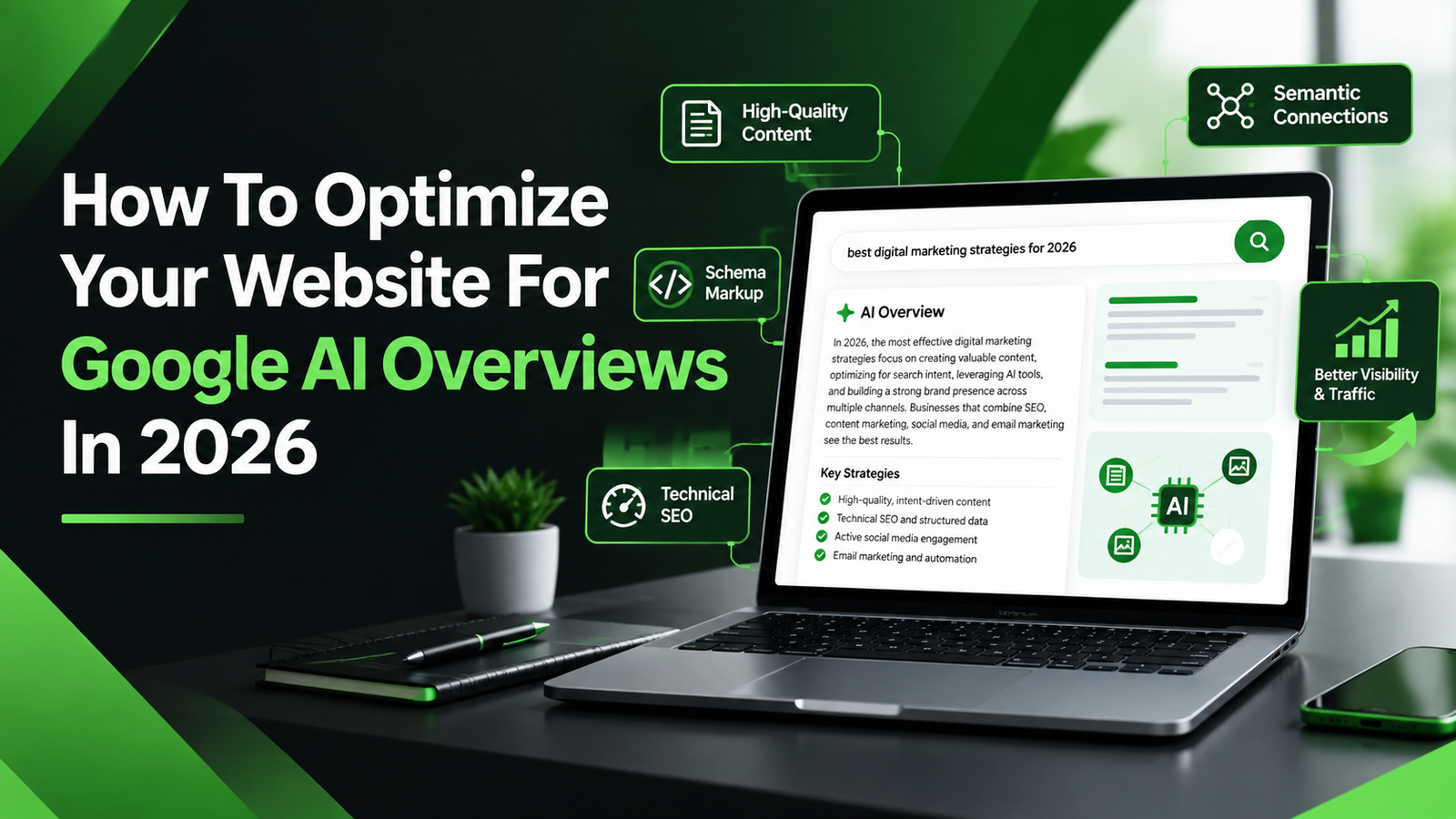
This shift is exactly why Google AI Overviews SEO matters so much right now. Understanding how to optimize for Google AI Overviews is becoming an important part of SEO alongside traditional search rankings.
What Google AI Overviews Actually Reward
AI Overviews pull answers from several credible sources. Then, they stitch those answers into one summary above the normal search results.
However, getting cited in an AI Overview does not require a separate set of SEO tactics. Google’s existing search and quality systems still matter. Creating helpful, reliable content that clearly answers the user’s question can improve your chances of being useful in both traditional search and AI-powered results.
Make important information easy to find and understand. Clear headings, direct explanations, and well-organized sections can also make the page easier for users to navigate.
Accuracy and relevance also matter. Update content when information becomes outdated, especially when covering topics that change frequently. Dates and bylines can provide useful context for readers, but updates should reflect meaningful changes to the content.
Therefore, generative engine optimization is not a one-time project. Instead, it is an ongoing habit. Refresh your statistics, links, and examples regularly. Furthermore, do not let old posts sit untouched for years.
Ultimately, these approaches directly shape how to rank in Google AI Overviews, since stale content quickly passes them by.
How To Structure Content For AI Overview SEO
Clear content structure can support AI Overview SEO while making your pages easier for users to navigate.
This approach makes important information easier for both readers and search systems to understand. When appropriate, use tables, numbered steps, or short lists to organize complex information clearly.
Furthermore, structured data adds another layer of clarity. Specifically, add schema markup like Article, FAQPage, and Organization tags. This helps Google understand context and the relationships between different pieces of your content.
Moreover, this step sits at the core of Google AI Overview optimization. Structured data hands the AI system a map instead of forcing it to guess at unstructured text.
Therefore, if you wonder whether your site is actually AI readable, a technical audit can show you exactly where the gaps sit.
Building The Trust Signals That Get You Cited
If you wonder how to get cited in Google AI Overviews, trust is where it starts. Notably, trust decides whether Google’s AI treats your content as reliable enough to reference.
Author bios can give readers useful information about who created the content and their relevant experience. This can strengthen credibility, especially in health, tech, or science, where accuracy matters and incorrect information can have serious consequences.
Your brand story also needs to stay consistent everywhere online. If your website claims one thing but your Google Business Profile says another, both Google and your audience start wondering which version is true.
Google reviews plug directly into this bigger picture. A steady drumbeat of authentic feedback shows you are actively serving customers and earning their trust.
Those reviews strengthen the exact credibility markers AI systems weigh before deciding to cite you. At the same time, watch out for typical Google Business Profile mistakes such as missing details, stale hours, or conflicting addresses might look minor, but they steadily erode the same trust you are trying to build.
Avoiding The Mistakes That Keep Businesses Invisible
Many businesses lean on generic AI tools to churn out content fast. They assume volume alone drives visibility. That approach usually backfires.
AI Overviews reward depth and completeness over sheer quantity. Thin, repetitive content rarely earns a citation, no matter how many pages you publish.
Wondering how to get featured in Google AI Overviews without falling into that trap? Focus on fewer, genuinely thorough pieces instead of flooding your site with shallow content.
Blocking AI crawlers entirely is another common mistake. Some businesses restrict crawler access, thinking it protects their content. But this can also block the citation opportunities they are chasing. Weigh that protection against visibility before you leave the setting unchecked.
Frequently Asked Questions
What are the Google AI Overviews ranking factors?
Google AI Overviews SEO depends on semantic completeness, content freshness, structured data, and trust signals. Important to note that author expertise and consistent branding all carry real weight. Also, pages that answer questions completely and stay current tend to perform best.
How do I get my website featured in Google AI Overviews?
There is no guaranteed way to get featured in Google AI Overviews. Follow Google’s established SEO best practices, publish helpful and reliable content, make important information easy to understand, and ensure your pages can be crawled and indexed.
What is Google AI Overviews SEO?
Google AI Overviews SEO refers to optimizing your website and content with AI-powered search experiences in mind while continuing to follow established SEO best practices.
Getting Your Business Seen In The New Search Landscape
Search has changed fundamentally. How to appear in Google AI Overviews now depends on structure, trust, and freshness working together, not keywords alone.
A strong Google AI Overviews SEO strategy can help businesses improve their visibility as AI-powered search continues to evolve.
14 K Business Solutions helps businesses build content and technical strategies designed for this new landscape, from Google Business Profile management to full generative engine optimization planning.
If your site has not been optimized for Google AI Overviews SEO and how people search today, reach out and let us help you get seen where it actually counts.