Social media platforms keep changing, but not every update deserves a complete change in your marketing strategy.
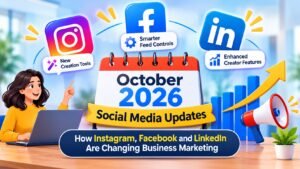
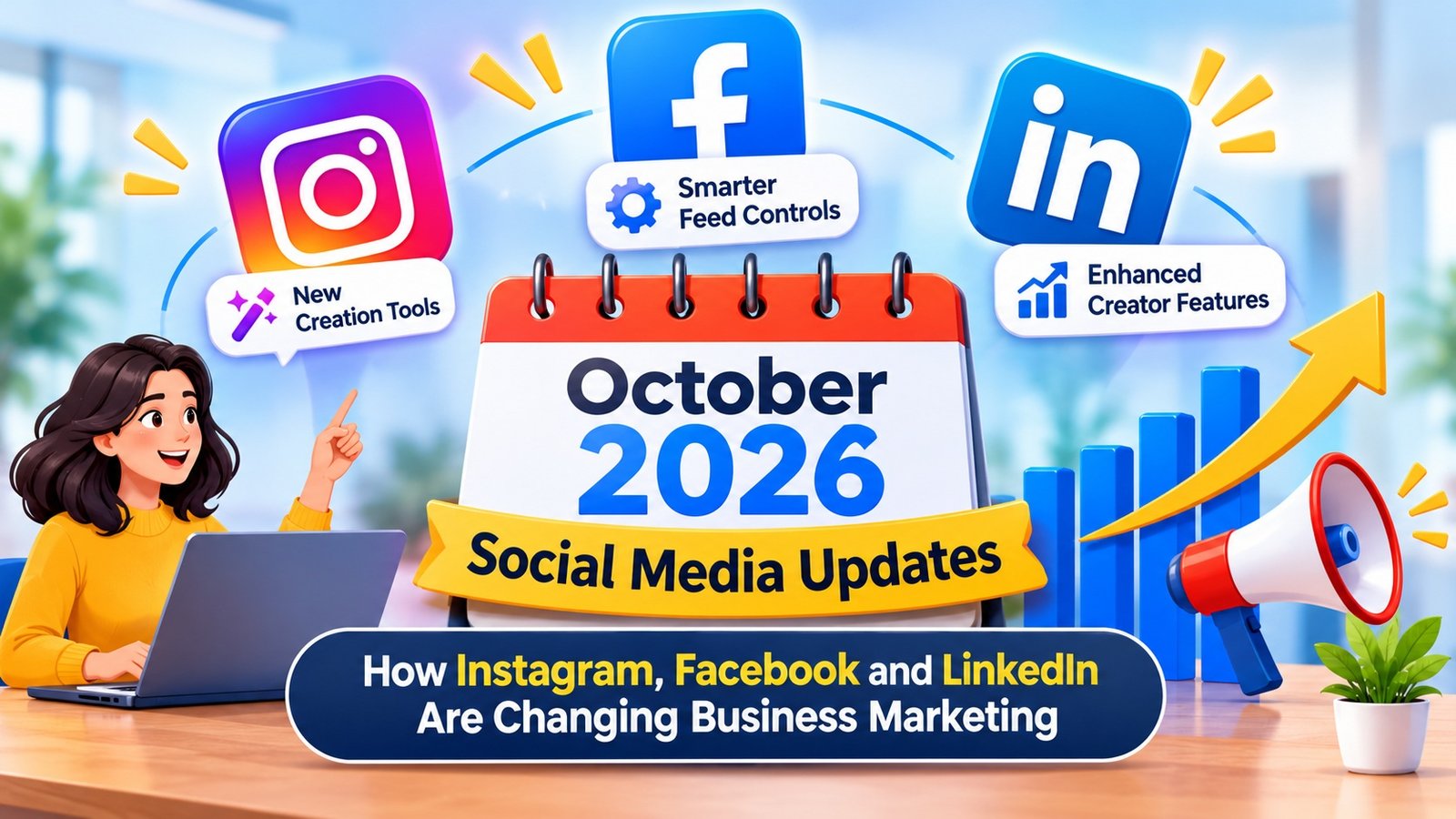
In October 2026, Instagram introduced new content creation options, Facebook gave users more control over what appears in their feeds, and LinkedIn continued expanding resources for business advertising.
For businesses that depend on social media to reach customers, these changes raise some practical questions. Should you adjust your content? Are Reels still worth producing? And how should you measure whether your posts are bringing in potential customers?
Here’s a closer look at the latest updates and what they mean for businesses planning their social media marketing.
What’s New on Instagram in October 2026?
Instagram’s October developments focus heavily on video, content organization, and creative tools. Some features are available now, while others remain in testing.
Instagram Is Testing Longer Videos and New Creator Series
Instagram is experimenting with a long-form video feature that supports horizontal videos lasting up to 90 minutes.
The feature, called Features, is being tested with selected creators in the United States and Brazil. It would allow creators to publish longer videos and connect shorter Reels to the full recording.
For businesses, this could eventually create more opportunities to share detailed demonstrations, interviews, educational discussions, and behind-the-scenes content.
An HVAC company, for example, could turn a longer equipment demonstration into several short clips covering common maintenance questions.
However, this isn’t a feature available to every business account. Companies should continue using their existing video tools rather than planning campaigns around an unfinished rollout.
Instagram is also testing new ways to organize creator content into series, giving viewers a clearer path between related videos.
Instagram Edits Now Supports Carousel Creation
On October 7, Meta announced that its Edits app could create carousel posts, expanding the app beyond video editing.
Users can combine photos, videos, text, and design elements within a carousel project.
For businesses that regularly publish educational posts, product collections, or before-and-after content, this offers another way to prepare Instagram content.
A home remodeling company could create a carousel showing different stages of a renovation. A restaurant might use one to introduce several menu items.
The feature initially became available on iOS, with Android support planned later.
The important point isn’t which editing app a business uses. It’s whether the finished post communicates something useful to its audience.
Instagram Is Testing a Reels-First Experience
Instagram has also been testing an interface that opens directly to Reels rather than the traditional feed.
This is a test, not a confirmed change for every Instagram user.
Still, it shows how much attention Instagram continues giving short-form video.
Businesses should consider whether their existing content works well as video. A service provider might explain a common customer problem in 30 seconds, while a retailer could demonstrate how a product works.
That doesn’t mean every post needs to become a Reel. Photos and carousels remain useful, particularly when customers need information they can read or revisit.
Facebook’s October 2026 Update Gives Users More Control
One of Facebook’s most significant October announcements concerns how people influence the content recommended to them.
Facebook Introduces “Your Algorithm”
On October 13, 2026, Meta announced a feature called Your Algorithm.
It allows users to tell Facebook which topics they want to see more or less frequently in Feed and Reels.
Instead of relying entirely on previous likes, comments, and viewing activity, Facebook is introducing ways for users to describe their interests directly.
People can access these controls through the three-dot menu on posts as the feature becomes available.
For businesses, this doesn’t create a new shortcut to higher rankings. Facebook hasn’t said that adding specific keywords will automatically make business posts appear more often.
It does, however, reinforce the importance of creating content around subjects that genuinely interest the people you’re trying to reach.
A local auto repair shop could publish straightforward advice about brake problems, seasonal maintenance, and warning lights rather than filling its page with repetitive promotions.
Customers interested in those topics have a clearer reason to engage with the content.
What About Facebook Groups?
Facebook also introduced Forum, a separate app designed around Facebook Groups, in late September.
Although it wasn’t an October launch, it remains relevant to businesses reviewing their community marketing strategies this month.
Local groups often bring together residents discussing neighborhood services, recommendations, and community events.
For a small business, participating in relevant conversations may be more useful than repeatedly posting advertisements.
A roofing contractor, for instance, might answer general questions about storm damage in a neighborhood group, provided the group’s rules allow business participation.
The goal should be to contribute useful information, not turn every conversation into a sales pitch.
What’s Changing on LinkedIn for Business Marketing?
LinkedIn’s October developments are more focused on helping marketers use existing tools effectively than introducing an entirely new organic content format.
That distinction matters for businesses looking for accurate information about platform updates.
LinkedIn Expands Its Training for Promoting Business Posts
In October 2026, LinkedIn Marketing Academy introduced new educational resources about boosting organic posts.
These resources explain how businesses can take a post that’s already performing well and promote it to reach a wider audience.
Boosting isn’t a brand-new LinkedIn feature. The October update concerns the training available to advertisers.
For B2B companies, the practical lesson is to evaluate organic content before investing advertising dollars.
Imagine a consulting firm publishes a post explaining common financial planning mistakes. If the post generates relevant conversations and inquiries, it may be worth testing as a promoted post.
A post that receives attention from people outside the company’s target audience may be less valuable, even if it earns plenty of likes.
LinkedIn Continues Emphasizing Advertising Measurement
LinkedIn also added training on using its Conversions API for retargeting audiences.
This helps advertisers understand how tracked customer actions can inform future advertising.
The technology itself isn’t new in October. What changed was the availability of additional educational resources.
For businesses investing in LinkedIn advertising, the broader takeaway is to look beyond impressions.
A campaign reaching thousands of professionals might appear successful. But if those people aren’t visiting the website, requesting information, or becoming qualified prospects, the business may need to reconsider its approach.
LinkedIn remains particularly relevant for companies selling professional services or targeting business decision-makers.
What Do These Social Media Updates Mean for Small Businesses?
The changes across Instagram, Facebook, and LinkedIn don’t point toward one universal marketing strategy.
They show why businesses need to understand how customers use each platform.
Instagram may be useful for product demonstrations, visual storytelling, and short educational videos. Facebook can support local conversations and customer relationships. LinkedIn offers opportunities to share professional expertise and reach business audiences.
A restaurant and a financial consulting company shouldn’t necessarily follow the same posting schedule or content format.
For example, a restaurant might use Instagram Reels to introduce a seasonal dish and Facebook to announce an upcoming community event.
A consulting company could publish practical business advice on LinkedIn while using Instagram to introduce its team or explain services in shorter videos.
The best approach depends on what customers want to know and how they prefer to interact with the business.
How Should Businesses Adjust Their Social Media Strategy?
Before changing your content calendar, review what’s already working.
Look at the posts that generate meaningful engagement, website visits, customer messages, or inquiries. Compare performance across platforms instead of assuming that one popular format will work everywhere.
Businesses should also consider the time required to produce each type of content.
A carefully planned video may be worthwhile if it answers a question customers regularly ask. Producing videos simply because a platform is testing new video features isn’t necessarily a good use of resources.
Keep an eye on feature availability, too. Instagram’s longer-video experiments and Facebook’s recommendation controls may not appear on every account immediately.
Professional Social Media Marketing Services can help businesses evaluate platform changes, develop relevant content, and measure performance against their marketing goals.
That includes choosing suitable formats, planning campaigns, reviewing audience responses, and adjusting content based on actual results.
Frequently Asked Questions
What Are the Biggest Social Media Updates in October 2026?
Instagram introduced carousel creation in Edits and continued testing longer videos and new viewing experiences. Facebook announced Your Algorithm, allowing users to influence their Feed and Reels recommendations. LinkedIn expanded training resources for boosting posts and advertising measurement.
Should Businesses Focus More on Instagram Reels?
Reels remain a useful format for reaching and engaging audiences, but businesses shouldn’t abandon photos or carousels. The right format depends on the message, target audience, and performance of previous content.
Does Facebook’s New Algorithm Feature Affect Business Pages?
Facebook’s Your Algorithm feature changes how users can influence their content recommendations. It may affect what people choose to see, but it doesn’t guarantee greater visibility for business pages.
Is LinkedIn Still Useful for Small Businesses?
Yes, particularly for businesses offering professional services or selling to other companies. LinkedIn can support industry discussions, professional credibility, and targeted advertising when the content reaches the right audience.
Can Social Media Marketing Services Help Businesses Adapt to Platform Updates?
Yes. Social Media Marketing Services can help businesses monitor relevant changes, plan platform-specific content, and evaluate campaign performance. However, no service can guarantee viral reach, follower growth, or a particular number of sales.
Make Your Social Media Marketing Work for Your Business
October 2026 brought several developments worth watching, but businesses don’t need to rebuild their marketing plans every time a platform announces something new.
Focus on understanding your audience, sharing useful information, and measuring the actions that matter to your business.
If your company needs help planning content and managing campaigns across different platforms, 14K Business Solutions offers Social Media Marketing Services to support your business’s social media goals.