
Most business owners burn through thousands of dollars on the wrong platform before they ever figure out the real difference between Google Ads and Meta Ads.
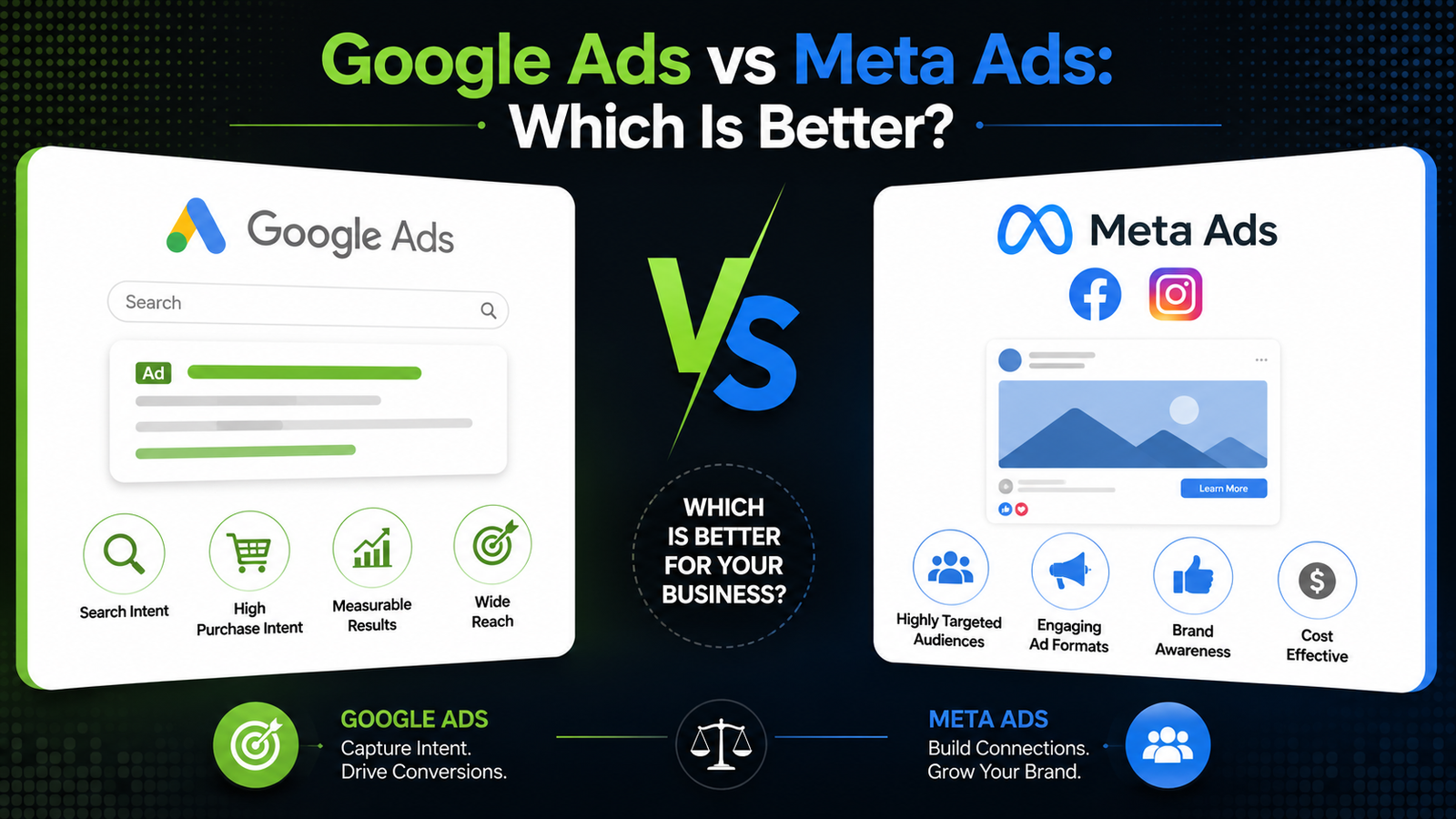
Google Ads helps you reach people who are already searching for a product or service. Meta Ads puts your business in front of people who may not even realize they need what you offer yet. That difference changes everything when it comes to cost, conversions, and where your advertising budget works hardest in 2026.
How Google Ads and Meta Ads Actually Work
Google local service ads shows your business to people who type searches into Google, YouTube, or partner sites.
When someone types plumber near me or best CRM for small business, your ad pops up right when they signal, they want to buy. This pull model works great for services, emergency repairs, and products people already know they want.
Meta Ads works on a push model. The platform studies what users like, where they live, what they buy, and what life events they are going through on Facebook, Instagram, and Messenger.
Then it puts your ad in front of people who look like your ideal customer, even if they are not shopping right now. This approach shines for visual products, lifestyle brands, and anything new that people are not yet searching for.
Google Ads relies on keywords and search intent. Meta Ads leans on creative quality and audience matching.
Both can work, but they serve totally different parts of the buying journey. If you understand the difference between Google Ads and Meta ads, you can use these to your benefit.
What Costs and Results Look Like in 2026
According to published 2026 benchmarks, Google Ads search campaigns average $2.96 per click across industries, up from $2.64 in 2025. That marks a 12% year-over-year increase.
Display campaigns on Google run much lower at $0.63 per click. However, industry swings are massive. Legal advertisers pay $6.75 per click on average, while e-commerce sellers pay $1.16.
Meta Ads pricing varies sharply by platform. Facebook CPC ranges from $1.06 to $1.72, while Instagram CPC runs $1.83 to $3.35.
E-commerce advertisers on Meta platforms see CPC figures around $0.65 to $0.90. A separate global benchmark puts average Facebook CPC at $0.63.
Cheaper clicks sound nice, but they do not always mean cheaper customers. Google Ads search traffic carries strong buying intent because users typed a specific query. Meta traffic arrives through interruption, which means more touchpoints before a sale.
Google local service ads matter more than ever for contractors, home service pros, and local businesses who need to show up at the top with verified badges and real reviews. These ads connect service providers directly with local customers who need help right now.
The cost and performance of Google Ads and Meta Ads vary from one business to another. Your industry, competition, audience, and campaign goals all play a role in determining which platform delivers the better return.
When to Pick Google Ads vs Meta Ads
Your business type and how your customers behave should drive this call, not trends or gut feelings.
Google Ads works best when people already search for what you offer. Locksmiths, dentists, software companies, and lawyers all win by capturing demand that already exists.
If your customers type specific searches into Google, this platform will probably bring faster conversions and stronger leads.
Meta Ads works best when you need to build awareness or launch something people are not yet looking for.
Fashion labels, beauty brands, new apps, and lifestyle services often do better on Meta because the platform nails visual storytelling and audience discovery. Someone scrolling Instagram might not need a new face serum today, but the right ad can spark that want.
Plenty of smart businesses run both. Meta Ads warm up cold audiences and build familiarity. Google Ads catch those same people later when they search for your brand or service. Running both together typically boosts overall return on investment compared to using just one platform.
How Targeting and Creative Strategy Differ
Google Ads targeting comes down to keywords, match types, negative keyword lists, and search query quality.
Your ad copy needs to match the exact intent behind the search. Your landing page needs to answer the question fast. The creative challenge here is relevance and clarity, not flashy design.
Uniquely, the Meta ads targeting comes down to audience segments, lookalike audiences, and behavioral signals. For Meta ads, your creative assets (creatives) do the heavy lifting.
Additionally, short videos, user-generated content, and carousel ads consistently beat static images. But creative fatigue hits fast on Meta, so you need fresh content every few days to keep performance strong.
It has been quite obvious that both platforms have leaned harder into automation in 2026. Google Smart Bidding and Performance Max campaigns now handle much of the optimization.
Meta Advantage+ audiences and automated placements have become the default recommendation. This shift means your strategy needs solid conversion tracking, clean data, and strong creative rather than constant manual tweaking.
Conclusion
When comparing Google Ads and Meta Ads, there is no single winner. Google local service ads grabs high-intent buyers who are actively searching.
Meta Ads creates demand among people who might not know they need your product yet. Your industry, budget, and customer journey should guide where you invest first.
For most businesses in 2026, the smartest play is testing both platforms, measuring real cost-per-acquisition, and letting actual data drive your budget split.
Start with the platform that matches how your customers currently behave, then expand into the other as you grow.
If you want expert help running Google Ads, Meta Ads, or both together, the team at 14 K Business Solutions builds data-driven campaigns that turn ad spend into real revenue.
Visit 14kbsol.com to see how we can grow your business with paid advertising that actually works.