
Every click, every scroll, every abandoned cart is basically a customer telling you something, whether you are listening or not.
Businesses that actually pay attention tend to grow faster than the ones running on gut feeling alone.
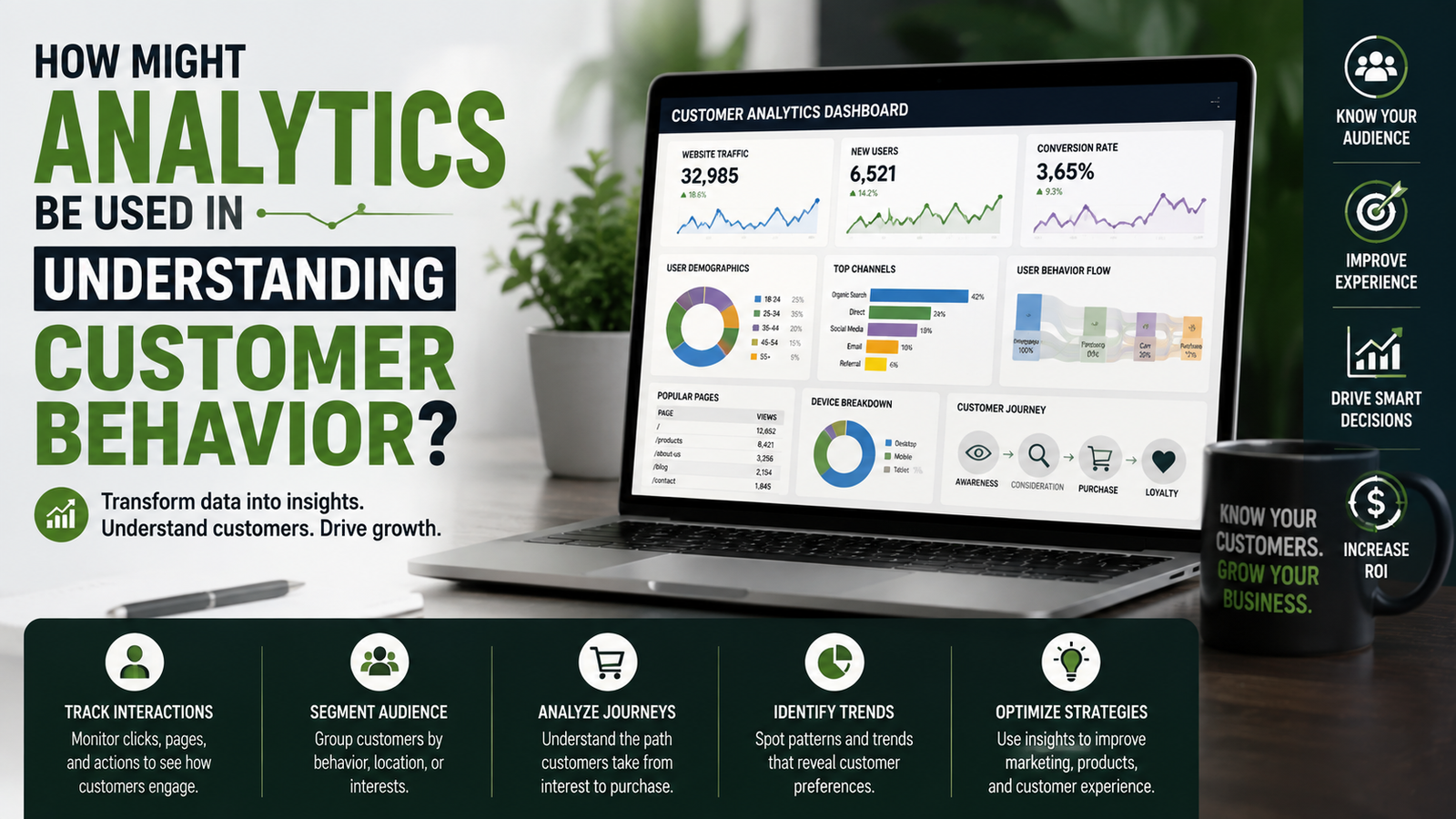
Customer behavior analytics takes all that raw data and turns it into something usable. It gives a real picture of what people want, where they get stuck, and what finally gets them to hit buy.
This piece walks through how businesses actually use Google Analytics to read their customers. What tools make it possible? Why does it end up shaping everything from ad budgets to product roadmaps?
What Customer Behavior Analytics Actually Tracks
At the core of it, customer analytics follows a customer across every point they touch a business. The tracking starts from the first ad they scroll past all the way to checkout, or the moment they just close the tab and leave.
Website behavior gets watched closely here. You get a complete idea of which pages people linger on, where they bail, and how long they sit before giving up without buying anything?
Purchase history fills in more of the picture too, showing which products tend to get bought together and who keeps coming back for more.
Lately, platforms have started pulling in sentiment as well. You get mining reviews, support tickets, even social media comments to figure out how people actually feel, not just what they clicked.
One page view alone tells you nothing. Thousands of them, stacked against purchase data, start telling a real story.
Turning Data Into Actual Customer Insights
Collecting the data is honestly the easy part. The hard part, and the valuable part, is turning it into real customer insights. Meaning, this data is something a business can actually act on instead of a dashboard nobody looks at twice.
Segmentation earns its keep here. It works by grouping customers by behavior or spending habits so a business stops blasting the same offer at everyone and starts sending the right message to the right group.
Predictive analytics pushes this further still. Say a retailer notices customers who buy running shoes tend to come back within three months for socks or apparel.
That is not a coincidence worth ignoring, it is a signal worth building a campaign around. Consumer behavior analysis works the same way for spotting churn, catching the quiet signs that someone is drifting away before they actually disappear for good.
Where This Data Actually Gets Used
Marketing teams lean on behavior data constantly, and it shows in how advertising works today. Google ads read behavioral signals to put ads in front of people already circling something similar. Of course, these ads are blasting a broad, untargeted campaign and hoping something sticks.
Local businesses get a version of this too. Google local service ads match nearby customers actively searching for a service with the businesses that offer it, based largely on intent and behavior.
It goes beyond ads, though. Product teams use behavior data to figure out what to build next, chasing actual friction points instead of guessing what customers might want.
Support teams benefit too. With this data, brands can know a customer’s history before the call even starts. As a result, you cut resolution time and make the whole interaction feel less like starting from zero.
Solid digital marketing strategies now build analytics into the whole customer journey, not just the marketing department’s corner of it.
Why This Matters More Now Than It Used To
Competition is not slowing down in any industry. Also, businesses running purely on instinct keep losing ground to the ones backing decisions with real numbers.
Understanding customer behavior means spending marketing dollars where they actually convert. You can benefit from it instead of spreading thin across tactics that sound smart but underperform once the numbers come in.
That precision counts even more for smaller businesses working with tighter budgets than the big players.
Customers expect to feel understood too, more than they used to. A business that misses that expectation starts losing people to competitors who clearly get their audience better.
Analytics is what closes that gap, turning scattered clicks and purchases into an actual picture of what customers want at each stage.
Frequently Asked Questions
How can analytics improve customer experience?
It shows you exactly where people get stuck, a confusing checkout, unclear product details, whatever it is. Fix what the data actually points to instead of guessing, and the experience gets smoother fast.
What is customer behavior analytics?
It is the practice of collecting and studying how customers interact with a business. Moreover, it measures website activity, purchase history, engagement across channels, all of it. That data helps businesses spot patterns and get ahead of what customers are likely to do next.
How does data analytics help understand customer behavior?
It catches patterns across huge volumes of interactions that nobody could spot by eye alone. Trends in browsing, buying, and engaging, all of it adds up to a clearer read on what actually drives customer decisions.
Why is customer behavior analysis important?
Because it keeps decisions grounded in reality instead of assumptions, across marketing, product, and support. Skip this step, and businesses end up pouring resources into things customers never actually wanted.
Bringing Analytics Into Your Growth Strategy
Understanding customer behavior is not really optional anymore for a business trying to compete.
It is part of how smart decisions get made now, whether that is sharpening ad targeting or shaping what gets built next.
14 K Business Solutions helps businesses put this into practice, turning customer behavior data into growth that actually shows up in the numbers.